Instrument Rating ACS in 2026: What the Checkride Actually Tests

Published by:
Amber P.
Published on:
Updated on:
Read time:
8 min read
You are under the hood, the approach chart is clipped where you can see it, and the evaluator has just said, “Fly the RNAV approach at the next airport, no autopilot, no vectors.” That moment is the instrument checkride in one sentence: can you plan, fly, and decide when the weather is against you? The ACS instrument standard tells you what the evaluator can ask.
This guide walks through the instrument rating ACS area by area, explains how the oral and flight portions work, shows where applicants most often fall short, and gives you a prep plan. If you want the big-picture idea of how the FAA writes these standards, start with our general explainer, Inside the ACS. This post stays on the instrument side.
What the Instrument ACS Is and Why Your Examiner Follows It
The Airman Certification Standards (ACS) is the FAA document that defines what you must know, consider, and do to earn a rating. For an instrument rating in an airplane, the current edition is FAA-S-ACS-8C. The practical test follows the ACS and regulations in effect on your test date, so check the FAA ACS page before you schedule.
Every Task in the ACS has three kinds of elements: knowledge, risk management, and skill. Knowledge is what you can explain. Risk management is how you spot and handle hazards. Skill is what you can fly to the stated tolerances. An instrument rating is a rating added to your pilot certificate, and the checkride is how an evaluator confirms you can act as pilot in command under instrument flight rules (IFR).
The evaluator does not have to ask about every element. The minimum is at least one knowledge element and one risk management element from each Task, plus any topics you missed on the knowledge test, and every skill element unless the Task says otherwise. Any Task can be sampled, and every flying skill will be watched, so surface-level study leaves gaps. Our instrument rating course is built around that task list.
The Eight Areas of Operation at a Glance
The ACS groups the checkride into eight Areas of Operation. Each one holds Tasks, and the areas line up with the instrument rules in 14 CFR 61.65.
| Area of Operation | Tasks inside it | What it asks of you |
|---|---|---|
| I. Preflight Preparation | Pilot Qualifications; Weather Information; Cross-Country Flight Planning | Show you can legally and safely plan an IFR flight |
| II. Preflight Procedures | Aircraft Systems Related to IFR Operations; Aircraft Flight Instruments and Navigation Equipment; Instrument Flight Deck Check | Prove the airplane is ready for IFR and you know its equipment |
| III. ATC Clearances and Procedures | Compliance with ATC Clearances; Holding Procedures | Copy, read back, and fly clearances and holds |
| IV. Flight by Reference to Instruments | Instrument Flight; Recovery from Unusual Flight Attitudes | Control the airplane by the panel alone |
| V. Navigation Systems | Intercepting and Tracking Navigational Systems and DME Arcs; Departure, En Route, and Arrival Operations | Navigate with the equipment installed |
| VI. Instrument Approach Procedures | Non-precision; Precision; Missed Approach; Circling; Landing from an Instrument Approach | Fly approaches and decide at the minimums |
| VII. Emergency Operations | Loss of Communications; Approach with Loss of Primary Flight Instrument Indicators | Handle failures calmly and by the book |
| VIII. Postflight Procedures | Checking Instruments and Equipment | Close out the flight and note what you saw |
In a multiengine airplane, Area VII also includes two simulated engine-out Tasks, one in straight-and-level flight and turns and one on an approach to landing. Those apply to multiengine tests only. If you are weighing that path, our multi-engine rating page explains it.
Where the Oral Starts Before the Engine Does
Much of your ground portion comes from the first three areas. You will plan a cross-country, read the weather for a go or no-go decision, and explain the airplane’s instruments, avionics, and systems. The evaluator may build a scenario, such as a flight with a forecast that is marginal at the destination, and ask what you would do at each decision point.
Here the risk management elements matter as much as the facts. Be ready to explain what you would do with an inoperative piece of equipment, why you picked an alternate, and when you would turn around. Our 2026 guide to instrument training at KHWO shows how South Florida weather and terminal airspace give you plenty of real planning practice.
Area III adds the clearance work. You are expected to comply with ATC clearances, speak clearly, and fly a hold correctly. A hold needs the right entry and the right timing while you keep scanning.
Areas IV and V: Flying the Panel Without Chasing the Needles
Area IV is the pure stick-and-rudder test. In Instrument Flight, the ACS skill standard is altitude within 100 feet, heading within 10 degrees, airspeed within 10 knots, and bank within 5 degrees in turns. You will practice against those tolerances for weeks, and a steady cross-check serves you better than a fast one.
Recovery from Unusual Flight Attitudes asks you to identify nose-high and nose-low attitudes from the instruments and return to level flight with the right control, power, and configuration in the right order. The risk elements cover spatial disorientation, task saturation, and loss of control.
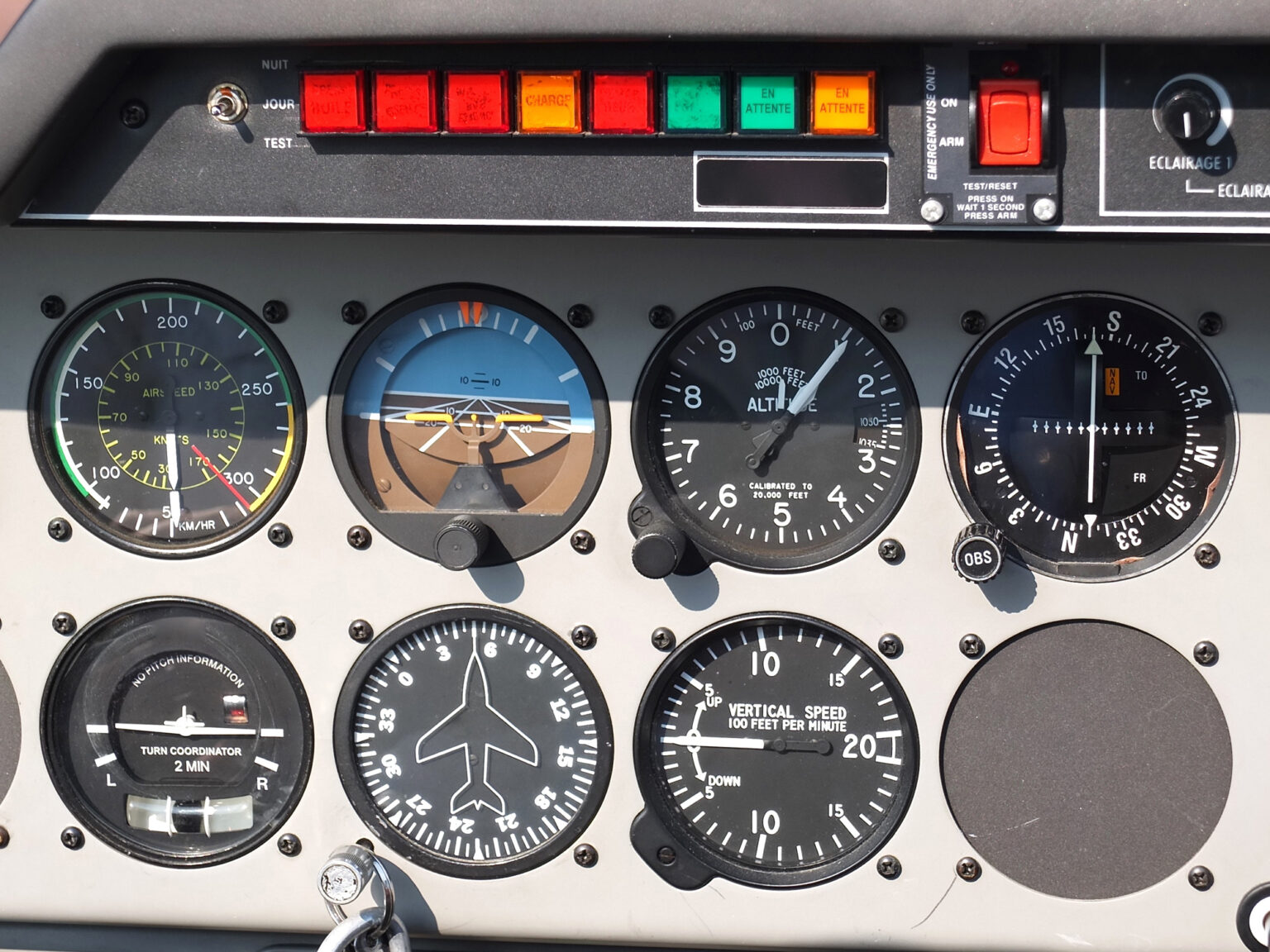
Area V covers tracking courses, intercepting them, and handling departures, en route work, and arrivals. DME arcs are tested only when they are charted and available, and you may use a suitable RNAV system on conventional procedures. Our guide to the aircraft instrument panel helps you connect each gauge to the Task it supports.
Area VI: The Approaches Where the Checkride Is Won or Lost
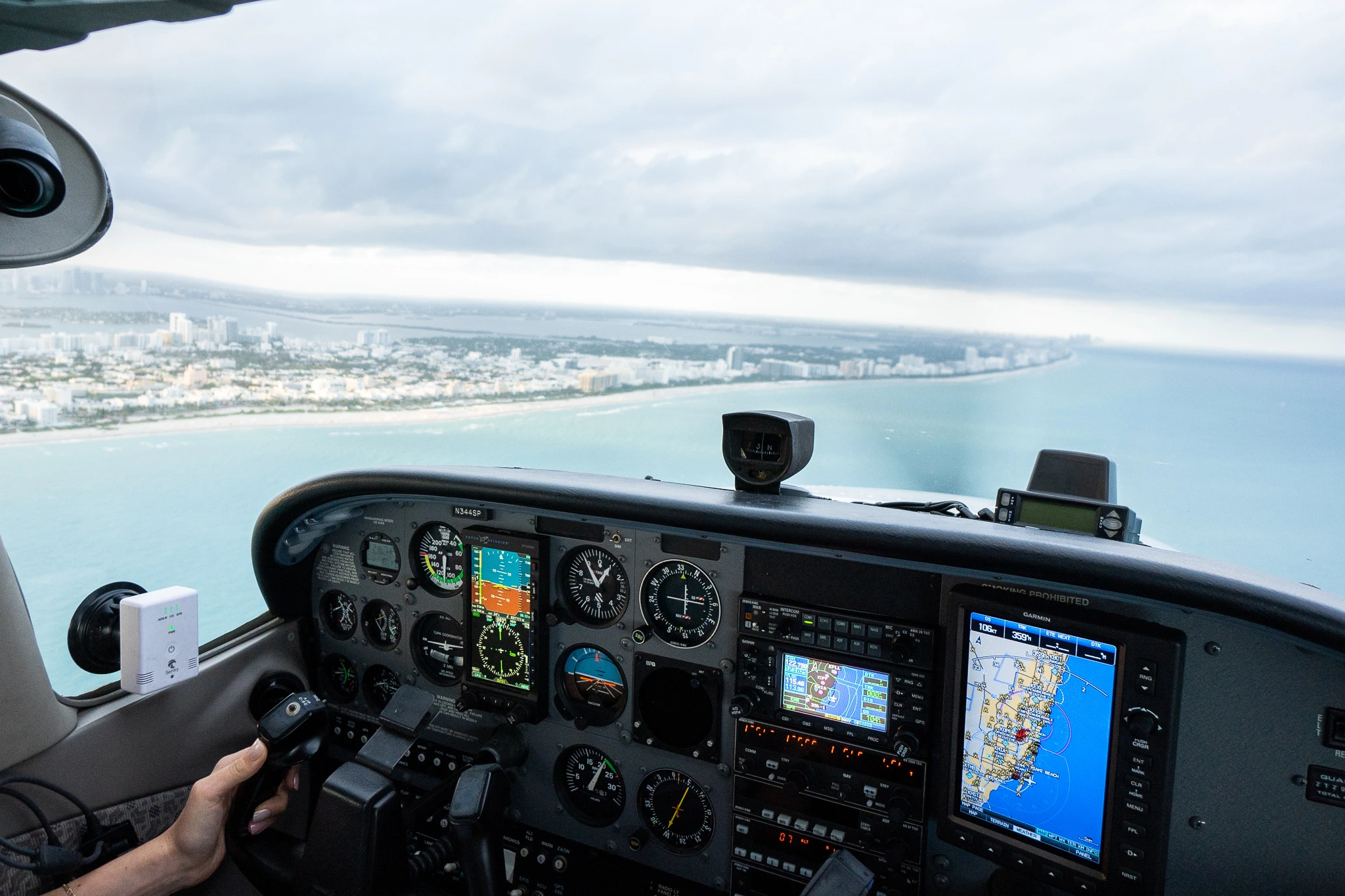
Approaches carry the most weight in the flight portion. The evaluator must select at least two different non-precision approaches in simulated or actual instrument conditions. One has to include a course reversal. One has to start at an initial approach fix without autopilot and without radar vectors. One has to be flown with backup or partial instrumentation, which simulates a realistic equipment failure. You also fly one precision approach to the decision altitude.
If the airplane has an installed IFR-approved RNAV system, you must show approach proficiency with it. On the non-precision final, altitude must stay at or above the minimum descent altitude with no more than 100 feet above it. On every approach you hold airspeed within 10 knots and keep course and glideslope deviation inside tight limits.
The decision is part of the skill. At the decision altitude, you either see the required visual references or you start the missed approach immediately. Descending “just a little” below minimums is a reason to fail. The Missed Approach, Circling, and Landing Tasks follow the same logic: act promptly, report to ATC, and fly the stated tolerances.
Areas VII and VIII: Handling Failures and Closing the Flight
The emergency Tasks reward calm, ordered thinking. Loss of communications asks you to follow the proper procedure and explain your choices. Approach with Loss of Primary Flight Instrument Indicators asks you to fly the approach on backup instruments and cues you may not use every day.
Area VIII is short but still graded. Checking instruments and equipment after landing shows you noticed how everything performed in flight.
How the Oral and Flight Portions Fit Together
The practical test has an oral portion and a flight portion, and the two blend together. Oral questioning continues throughout the entire test. You must pass the ground portion before the flight begins, and the evaluator may keep asking questions in the air to test knowledge your flying did not show.
The evaluator builds a plan of action with scenarios that cover as many Tasks as practical, and may add problems or simulated emergencies as the flight unfolds. Expect realistic distractions, too, since the ACS tells evaluators to use them. You will also need a view-limiting device for the instrument portions, and the evaluator will ask about the automation and avionics in your airplane.
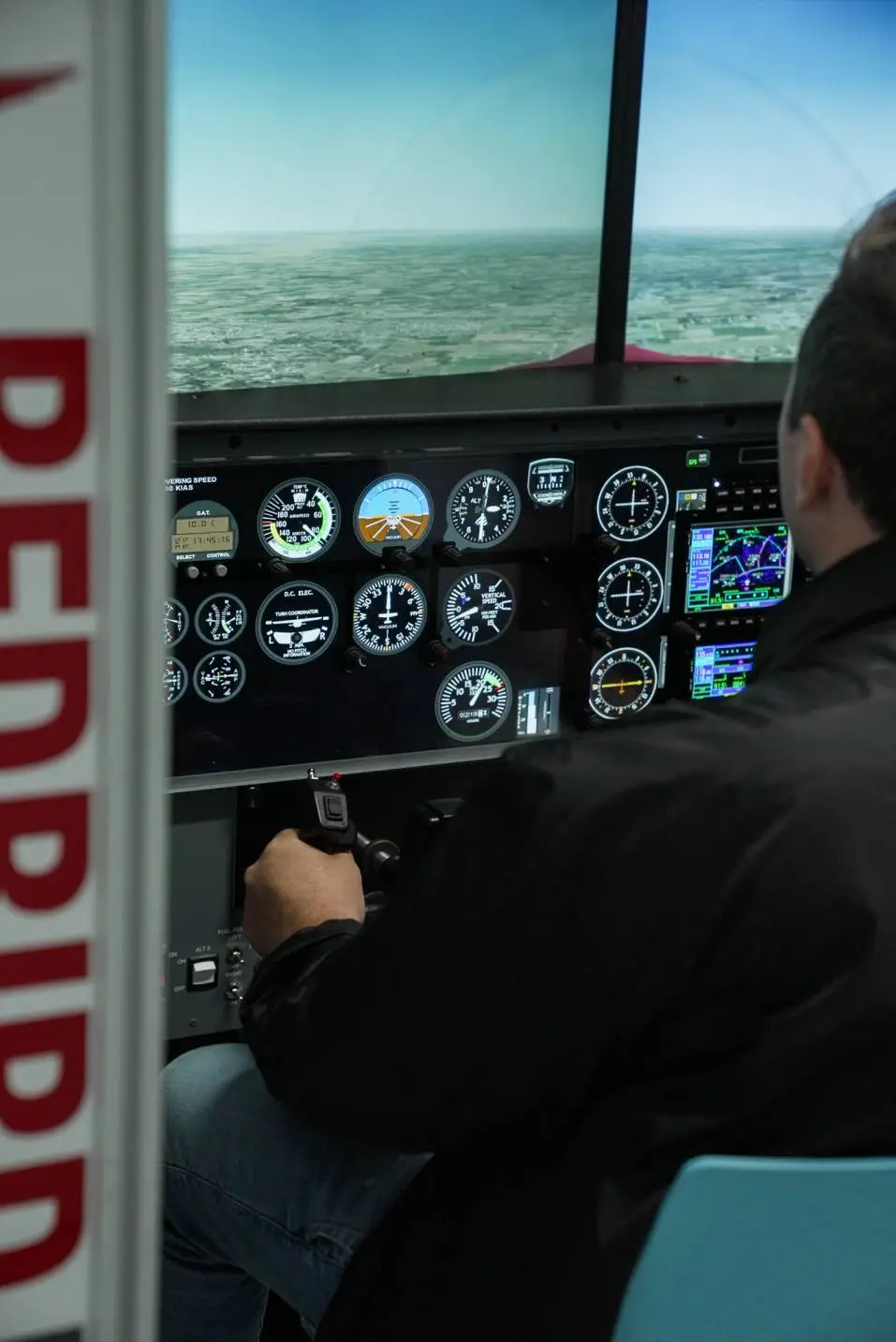
Aviation training devices cannot be used to accomplish a practical test, so a simulator works as a rehearsal tool and the test itself is flown in the airplane.
Where Applicants Fall Short
The ACS lists the usual grounds for an unsatisfactory result, and they read like a to-do list:
- Needing the evaluator to step in to keep the flight safe.
- Poor scanning or clearing before and during maneuvers.
- Consistently exceeding tolerances or failing to correct them promptly.
- Failing to manage risk, such as pressing past minimums or ignoring a weather trend.
If you miss a Task, you fail that Task and its Area of Operation, and the evaluator issues a Notice of Disapproval. You keep credit for the Areas you passed. A Letter of Discontinuance is different: it is issued when weather, equipment, or illness stops the test for reasons other than performance. Either outcome gives you a clear list of what to work on next.
A Prep Plan That Follows the Task List
Use the ACS as your study checklist and work it Task by Task. Pair each Task’s knowledge and risk management elements with a flight or simulator session that practices the skill, and ask your instructor to grade you against the tolerances above.
- Review your knowledge test report for the ACS codes you missed, since the evaluator can test those topics.
- Fly mock scenarios, not isolated maneuvers, so planning, approach, and emergency handling run together.
- Practice the partial-panel approach until it feels as calm as a full-panel one.
- Brief the decision altitude on every approach: what you expect to see and what you will do if you do not.
- Rehearse the oral out loud with your instructor playing the evaluator.
Our CFII instructors guide Part 141 and Part 61 students through this process, and we use our Redbird simulator for repetition before you spend time in the airplane. If you already hold the rating and need to get current, the instrument proficiency check uses a defined subset of these same Tasks, and our IPC prep guide explains the process.
Instrument Checkride Questions We Hear Often
How many approaches will I fly on the instrument checkride? The evaluator selects at least two different non-precision approaches and one precision approach, and may add more as the plan of action requires.
Can I use my autopilot? Automation management is part of the test, but at least one non-precision approach must be flown from an initial approach fix without the autopilot and without radar vectors.
Can I take the checkride in a simulator? No. Aviation training devices cannot be used to accomplish the practical test, though they help you practice.
Does the checkride follow the same ACS my instructor uses? It follows the ACS and regulations in effect on your test date, which is why we confirm the current edition with you before scheduling.
What happens if I miss one Task? You fail that Task and Area of Operation, receive a Notice of Disapproval, and keep credit for the Areas you passed.
Can I finance my instrument training? Financing options through Stratus Financial may be available to qualified applicants.
Talk Through Your Instrument Checkride Plan With Us
Preparation works best when the ACS becomes a plan you can fly, Task by Task. If you want help mapping your training to the instrument checkride, contact us and we will talk through where you are and what comes next.


 More Right Rudder