Flight Review Checklist 2026: What to Prepare and Expect

Published by:
Amber P.
Published on:
Updated on:
Read time:
8 min read
Your logbook is open on the counter, you are paging back to the date of your last review, and the math suddenly matters. If your flight review has lapsed, you cannot act as pilot in command until it is done. If it is coming due, the better question is how to make the required hours useful instead of rushed.
This checklist covers the documents to bring, the ground topics to refresh, the minimum time under 14 CFR 61.56, what the flight portion usually looks like, and how to schedule. If you want the background on what a BFR is, start with our explainer, What Is a BFR in Aviation?. This post is for the pilot who already knows and wants to show up ready.
Check Your Date Before You Book Anything
Under 14 CFR 61.56, most pilots need a flight review within the 24 calendar months before the month in which they act as pilot in command.
Here is a worked example. If your last review was completed on any day in March 2025, it covers your pilot in command flying through March 31, 2027. Your clock runs to the end of the month.
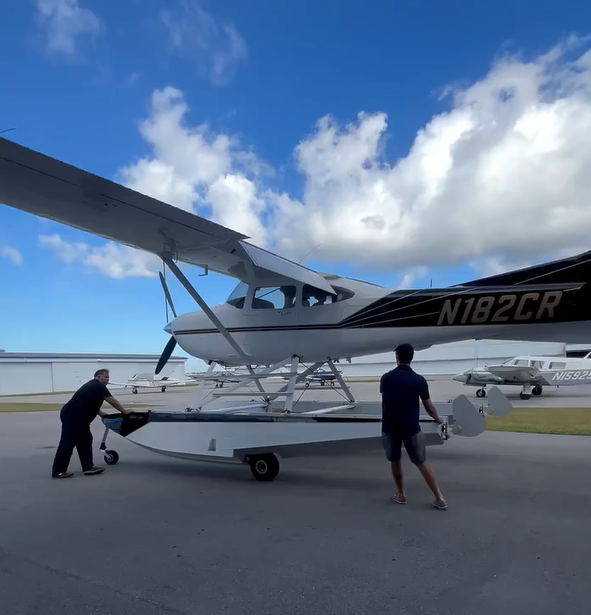
Before you book, check whether another event already reset it. A practical test or pilot proficiency check for a certificate, rating, or operating privilege within the window means you do not need a separate review under 61.56(d). Completing a phase of the FAA WINGS program does too, under 61.56(e). Our post on whether a seaplane rating counts as a flight review shows how one of those events plays out in practice.
If none of those apply, a dedicated session on our Flight Review (BFR) page is the straightforward route.
The Documents to Put in Your Flight Bag
A short stack of paperwork saves the first ten minutes of your session. Bring these:
- Your pilot certificate and a government photo ID
- Your medical certificate, if your operation requires one
- Your logbook, because the instructor endorses the review there
- Your notes on what feels rusty, written down before you arrive
Add anything you normally carry for the airplane you plan to fly, such as a headset and a current chart or electronic flight bag. If you rent, the aircraft’s documents will be part of the conversation on the ramp.
The logbook is the one that matters most. When your instructor is satisfied, the logbook endorsement from an authorized instructor is your proof that the review is complete. Without it, the hours you flew do not count as a review.
Ground Topics Worth Refreshing
The ground portion has one required topic. Your instructor must review the current general operating and flight rules of Part 91. Beyond that, the rule leaves the content to the instructor’s judgment. In practice, a session usually follows what your flying actually needs.
These are the topics that tend to come up, and the ones worth a quick refresh the night before:
- Part 91 general operating rules, including pilot in command authority, preflight action, and the required documents and equipment
- Airspace, such as the classes you cross, the entry requirements for each, and how towered airports near you handle arrivals
- Weather, including how you read forecasts, how you set go or no-go limits, and what you do when conditions change
- Aircraft systems on the airplane you will fly, including fuel, electrical, and avionics you rely on
- Risk management, meaning your personal minimums and how you decide before the engine starts
For a South Florida pilot, airspace and weather get practical quickly. A pilot who flies local VFR around North Perry (KHWO) has a different review than a pilot who takes cross-country trips through busy Miami and Fort Lauderdale airspace. Tell your instructor which one you are, and the hour will go where it counts.
If you want a refresher in a classroom setting before the session, our ground school is a place to rebuild the rules and weather basics.
The Minimum Is 1 Hour on the Ground and 1 Hour in the Air
The rule sets a floor: a minimum of 1 hour of ground training and 1 hour of flight training. Treat it as a starting point. Your instructor can add time on either side, and many pilots who have been away from flying for a while benefit from it.
A review is instruction, not a checkride. There is no examiner, no new certificate on the line, and no checkride-style pass or fail. Your instructor works with you, and when your flying and knowledge meet the standard, they sign your logbook. If something needs more work, the session continues as dual instruction until it does.
That is why honesty helps. Saying “my crosswind landings have slipped” gives your instructor a place to spend the flight hour. Hiding it only means the instructor finds it on short final.
What the Flight Portion Usually Covers
Your instructor chooses the maneuvers and procedures needed for you to show safe use of your certificate privileges. For many airplane pilots, the flight hour includes a mix of these:
- Takeoffs, landings, and go-arounds, with attention to stable approaches and runway alignment
- Slow flight and stalls, to keep you comfortable near the edge of the envelope
- Steep turns and other control work, to check smooth aircraft handling
- Emergency procedures, so your response is organized and not improvised
- Navigation and diversion decisions, to see how you plan and replan
- Radio and traffic awareness in the airport environment you actually use
Notice that this list changes with the pilot. A pilot who flies a complex airplane may spend more time on systems and emergencies. A pilot who mostly stays in the pattern may spend more time on landings and traffic. The flight looks at how you fly now.
If you hold an instrument rating and your flying is mostly IFR, say so when you schedule. The same session can be shaped around the way you fly, within what your instructor judges appropriate.
Flight Review, IPC, or Both? Know the Difference
Pilots with instrument ratings often mix up the flight review and the instrument proficiency check (IPC). They answer different questions.
| Event | What it answers | Where it is covered |
|---|---|---|
| Flight review | Can you still exercise your certificate privileges safely? | 14 CFR 61.56 |
| Instrument Proficiency Check (IPC) | Are you current to fly under IFR again after the six-month window lapsed? | 14 CFR 61.57 |
| Practical test for a rating | Do you meet the standard for a new certificate or rating? | 14 CFR 61.56(d) lets it count as a review |
An IPC does not automatically count as a flight review. The rule does allow the review to be combined with the recent-experience requirements in 61.57 at the instructor’s discretion, so a single session can serve both purposes. If you need both, say so when you schedule, so the ground and flight cover both and both are logged.
For a closer look at the instrument side, read how to prepare for an instrument proficiency check. If your instrument skills have slipped further than a check can fix, our instrument rating course is the longer path.
A Simple Plan for the Week Before
- Find your last review date in your logbook and confirm the month.
- Skim Part 91 for the rules you use most: airspace, weather minimums, right of way, and required equipment.
- Write your rusty list. Landings, radio calls, stalls, crosswinds, and weather decisions are all fair items.
- Know your usual mission: local flights, family trips, rentals, or instrument flying.
- Pack the bag with the documents above.
On the day, expect the ground session first, then the flight, then a debrief. We start by talking through your flying, then review the ground items that fit it, then fly a profile that matches. If you meet the standard, your instructor endorses the review.
How to Schedule Your Review at North Perry
We conduct flight reviews at North Perry Airport (KHWO) in Pembroke Pines, and we build each one around your certificate, your aircraft, and your goals. Session length depends on you, so contact us for current availability and rates and you will know the plan before you fly.
Cost is part of planning, and we would rather talk about it early. We partner with Stratus Finance for flight training financing options, and you can ask about them when you reach out.
Flight Review FAQ
How often do I need a flight review?
Most pilots need one within the 24 calendar months before the month they act as pilot in command, unless an exception such as a recent practical test, a pilot proficiency check, or a WINGS phase applies. Our Flight Review (BFR) page lays out how we handle the session.
How long does a flight review take?
The minimum is 1 hour of ground training and 1 hour of flight training. Your instructor may add time depending on how current and comfortable you are.
Can I fail a flight review?
A flight review is not a checkride, so there is no checkride-style pass or fail. If your instructor cannot sign the endorsement yet, you keep training until they can.
What should I bring?
Bring your pilot certificate, a government photo ID, your logbook, and your medical certificate if your operation requires one. Bring your list of rusty items too.
Does an IPC count as a flight review?
Not automatically. An IPC is a separate instrument currency event, though an instructor may combine it with a review in one session. Tell us when you schedule if you need both.
Can I do a flight review as part of other training?
Some events can reset the requirement, including a practical test for a new rating. Read how that works in our post on seaplane ratings and flight reviews.
Schedule Your Flight Review at North Perry
Your review ends with a signed logbook and a sharper plan for the next two years of flying. Bring your logbook, your rusty list, and a question or two.
Enroll now to schedule your flight review with Sun City Aviation Academy at KHWO.


 More Right Rudder