Instrument Rating in Florida:
The Complete 2026 Guide
Learn what the instrument rating requires, how training runs from your first lesson to the checkride, and how to plan a pace you can keep at North Perry Airport (KHWO).
What an instrument rating adds to your pilot certificate
An instrument rating is an FAA rating added to your pilot certificate. It teaches you to control the airplane and navigate by the instruments alone, so you can fly in clouds and low visibility when the airplane, your currency, and the rules allow it.
Picture the first time the windshield turns white. In visual flying, the horizon tells you what the airplane is doing. Under the hood, the instrument panel becomes your horizon, and training teaches you to trust it. You also learn to copy a clearance, file an IFR flight plan, and fly an approach down to the minimums.
This guide puts the whole path in one place: the requirements in 14 CFR 61.65, the training steps, the panel and scan basics, the written test, the checkride, and how to set a pace. Where a topic has its own article, the link sits right at that step.
Training at North Perry (KHWO)
Why South Florida Is a Strong Place to Learn IFR
Sun City Aviation Academy trains at North Perry Airport (KHWO) in Pembroke Pines, a towered airport near Miami and Fort Lauderdale airspace. Using ATC procedures on your flights means clearances and readbacks feel familiar by the time you reach IFR work.
South Florida weather gives you steady practice in go or no-go decisions. Thunderstorms and sea-breeze patterns make weather planning part of every lesson. Our KHWO instrument training guide goes deeper on the local environment.
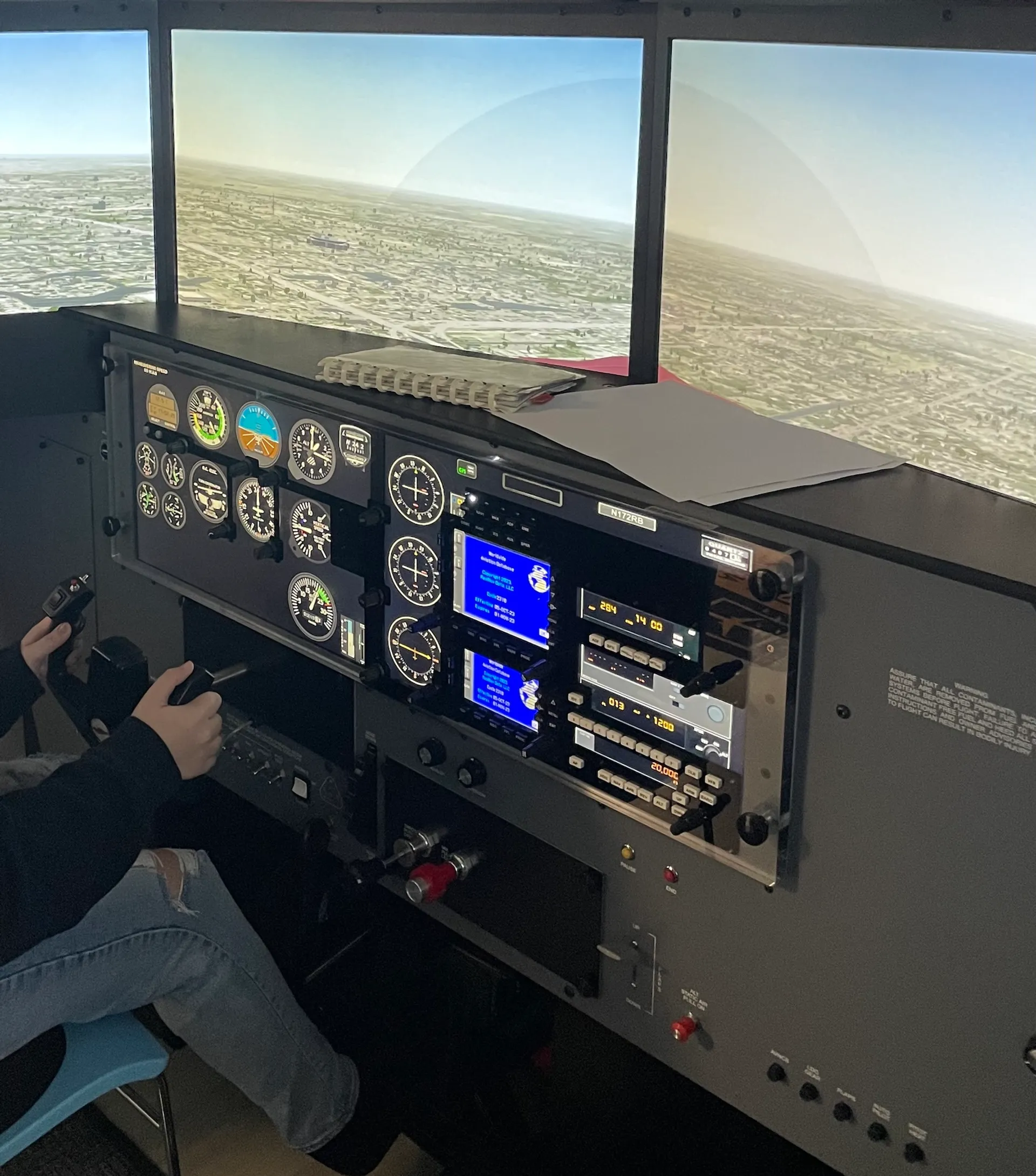
You build procedures in our Redbird simulator and then fly them in Garmin-equipped aircraft with your CFII, so you repeat each procedure on the ground before you fly it for real. See the full instrument rating course for how we run it.
Ask About Instrument Training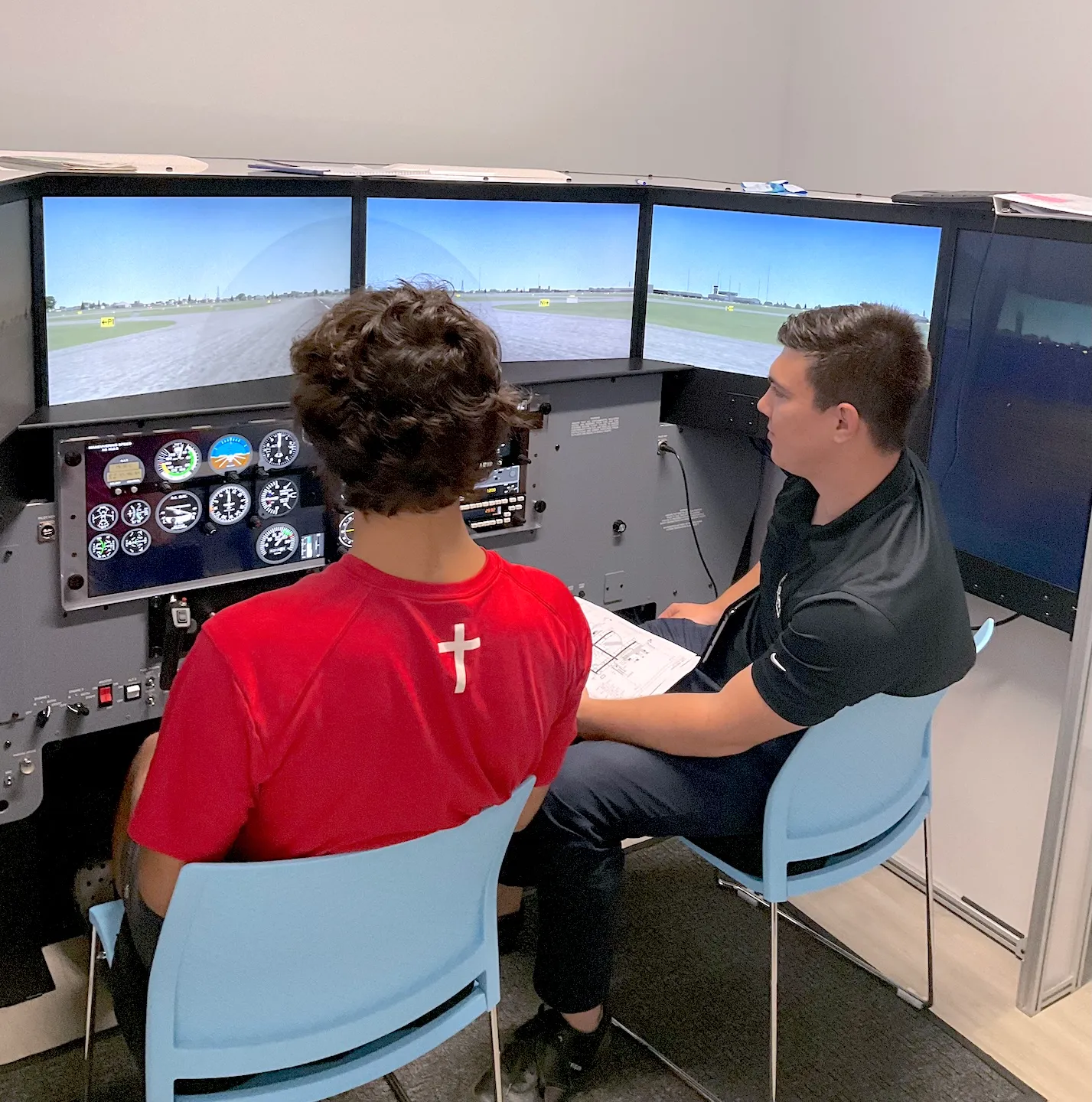


Why Pilots Add It
Why the Instrument Rating Is Worth Planning Carefully
The rating changes where and when you can fly, and it changes how you make weather decisions. A plan for your pace saves months.
With the rating, weather becomes a smaller wall. A qualified, current pilot can act as pilot in command under instrument flight rules (IFR) or in weather below visual minimums, subject to the aircraft's equipment, your currency, and the operating rules. Thunderstorms and icing still keep you on the ground, and part of your training is learning when to say no.
If you are headed for a career, the rating is close to a requirement in practice. A commercial pilot without one faces limits on carrying passengers for hire at night and on cross-country flights beyond 50 nautical miles (14 CFR 61.133), so most career-track pilots add it before or alongside the commercial certificate. Our commercial pilot license guide shows where it fits.
Pace decides your timeline more than the minimums do. The FAA sets minimum hours, but minimums are not a completion promise, and students finish at different speeds depending on weather, scheduling, and study habits. Flying several lessons a week keeps procedures fresh, while long gaps tend to stretch a schedule because approaches and holds fade between flights.
You can train under Part 61 or Part 141. Part 61 is the FAA's general rule set for pilot certification and offers more scheduling and pacing flexibility. Part 141 is the FAA-certificated pilot school path, with an approved syllabus, stage checks, and required records. We hold both approvals at Sun City, and neither is better for every student. Our Part 61 flight school FAQ compares them in detail.
Cost depends on your pace and your path. Contact us for a current estimate that separates aircraft, instructor, testing, and examiner fees. Financing options through Stratus Financial may be available to qualified applicants.
Your Instrument Rating Path in Five Steps
- 1. Confirm you meet the requirements
Under 14 CFR 61.65, you need a private pilot certificate with an airplane rating (or you apply for it at the same time), and you must read, speak, write, and understand English.
You need 50 hours of cross-country time as pilot in command, with at least 10 of them in an airplane, and 40 hours of actual or simulated instrument time. At least 15 of those 40 hours are instrument training with an authorized instructor.
Approved simulators and training devices may count toward part of the instrument time, within FAA limits. Your instructor tracks what counts, and your logbook is the proof.
- 2. Train the skills in order
Training starts with basic attitude instrument flying: climbs, descents, and turns flown by the panel. Then you add radio navigation, holds, and approaches.
We pair you with a certified flight instructor instrument (CFII). You build procedures in a Redbird simulator before you fly them in our Garmin-equipped aircraft, and when it is safe and conditions allow, we look for chances to give you actual instrument conditions.
Training also includes one IFR cross-country of at least 250 nautical miles along airways or ATC-directed routes, with an approach at each airport and three different kinds of approaches. In the 2 calendar months before your checkride you need 3 hours of instrument training with an instructor.
- 3. Learn the panel and build your scan
An aircraft instrument panel puts six primary instruments in front of you: the airspeed indicator, attitude indicator, altimeter, turn coordinator, heading indicator, and vertical speed indicator. Together they tell you pitch, bank, heading, altitude, and speed.
The skill is the scan: a repeating path of eye movement through those instruments so no single gauge holds all your attention. A steady cross-check serves you better than a fast one. Panels differ between airplanes, with traditional dials in some and glass displays in others, so learn the logic instead of one layout.
Our post Breaking Down an Instrument Panel walks through each gauge.
- 4. Pass the FAA knowledge test
Your instructor gives you ground training on IFR regulations, the Aeronautical Information Manual, air traffic control, charts, weather, and decision-making, then endorses you for the written test.
Take it early enough that weak topics show up while you still have flights to work on them. Any topic you miss can come up again in your oral exam.
- 5. Prepare for the checkride and the ACS
The instrument rating checkride is the FAA practical test, with an oral portion and a flight portion, given by an FAA Designated Pilot Examiner (DPE). It follows the Instrument Rating Airplane Airman Certification Standards (ACS).
The ACS lists knowledge, risk management, and skill elements for each task. The examiner samples knowledge and risk questions and watches your flying skills. Read what the instrument ACS actually tests and the broader explainer Inside the ACS.
Your instructor recommends you for the test when you meet the requirements and are ready.
After the checkride, stay current. IFR currency runs on its own clock, and a lapse can be fixed with an instrument proficiency check. See our instrument proficiency check page and the IPC prep guide.
If a twin is next, our multi-engine rating page explains the add-on, and the ACS post covers the engine-out tasks that join the instrument checkride in a multiengine airplane.
Instrument Rating FAQ
Frequently Asked Questions About Instrument Rating Training
Straight answers on requirements, pace, cost, simulators, and the checkride.

Start Your Instrument Rating Plan
Talk to Our Team
Tell us where you are in your training, and we will talk through your requirements, schedule, and pace with you. You can also visit us at North Perry Airport (KHWO) in Pembroke Pines.
 More Right Rudder