Multi-Engine Time Building Schedule in 2026: 3, 6, 12 Month Paths

Published by:
Amber P.
Published on:
Updated on:
Read time:
8 min read
You have a target in your logbook, a calendar on the screen, and one question: how often do you have to fly to get there? The usual answer to a multi engine time building schedule question is “it depends.” It does, on arithmetic you can finish in five minutes. Your target hours, the weeks you give yourself, and the length of a typical flight set the whole plan.
Below are three example paths that finish in 3, 6, or 12 months. The figures are illustrations built on stated assumptions, so swap in your own numbers. When you are ready to see how a plan fits our Beechcraft Duchess, contact us for current block rates and schedule availability.
Start With Weekly Hours, Because Everything Else Follows
Divide your target hours by the weeks you can fly, and you have your weekly load. Divide the weekly load by the length of an average flight, and you have your flights per week. Two divisions are the whole formula.
Our examples use three assumptions. A month is about 4.3 weeks, so 3, 6, and 12 months come to 13, 26, and 52 weeks. We hold back about 15 percent of those weeks as a buffer, which leaves 11, 22, and 44 flying weeks. And an average flight lasts 1.5 hours.
If you do not yet hold the rating, the multi-engine rating add-on comes first. Most pilots complete it in 10 to 15 flight hours, and the work starts in our Redbird simulator before you move to the airplane. At an example 3 hours a week, those flight hours fill about 3 to 5 weeks, so add them in front of any path below.
Three Paths: 25 to 200 Hours in 3, 6, or 12 Months
The table shows the weekly load for seven example targets. The targets of 25, 50, and 100 hours match our block sizes, and 200 hours is two 100-hour blocks.
| Path | Calendar weeks | Flying weeks after buffer | Hours to build | Hours per flying week | Flights per week at 1.5 hours |
|---|---|---|---|---|---|
| 3 months | 13 | 11 | 25 | about 2.3 | about 1.5 |
| 3 months | 13 | 11 | 50 | about 4.5 | about 3 |
| 3 months | 13 | 11 | 100 | about 9.1 | about 6 |
| 6 months | 26 | 22 | 50 | about 2.3 | about 1.5 |
| 6 months | 26 | 22 | 100 | about 4.5 | about 3 |
| 12 months | 52 | 44 | 100 | about 2.3 | about 1.5 |
| 12 months | 52 | 44 | 200 | about 4.5 | about 3 |
Read the table by its pattern. Doubling the calendar halves the weekly load, so 50 hours in 3 months asks for the same effort as 100 hours in 6 months or 200 hours in 12 months. The 3-month, 100-hour row is the outlier at about 9 hours a week. That is a heavy load, and only your own calendar can tell you whether it fits.
Our block packages come in 25, 50, and 100 hours, and they carry discounted rates compared with booking hour by hour. Pick the size that matches the row you can actually fly, and add another block when the first one runs out. Our cost breakdown explains the lines behind each hourly rate.
Why Flight Length Changes Your Flights Per Week
Flights per week depends on how long each flight runs. A pattern-work hour and a long cross-country leg fill a calendar very differently. The table keeps the three weekly loads from above and varies the flight length.
| Hours per flying week | 1-hour flights | 1.5-hour flights | 2-hour flights |
|---|---|---|---|
| about 2.3 | about 2.3 flights | about 1.5 flights | about 1.1 flights |
| about 4.5 | about 4.5 flights | about 3 flights | about 2.3 flights |
| about 9.1 | about 9.1 flights | about 6 flights | about 4.5 flights |
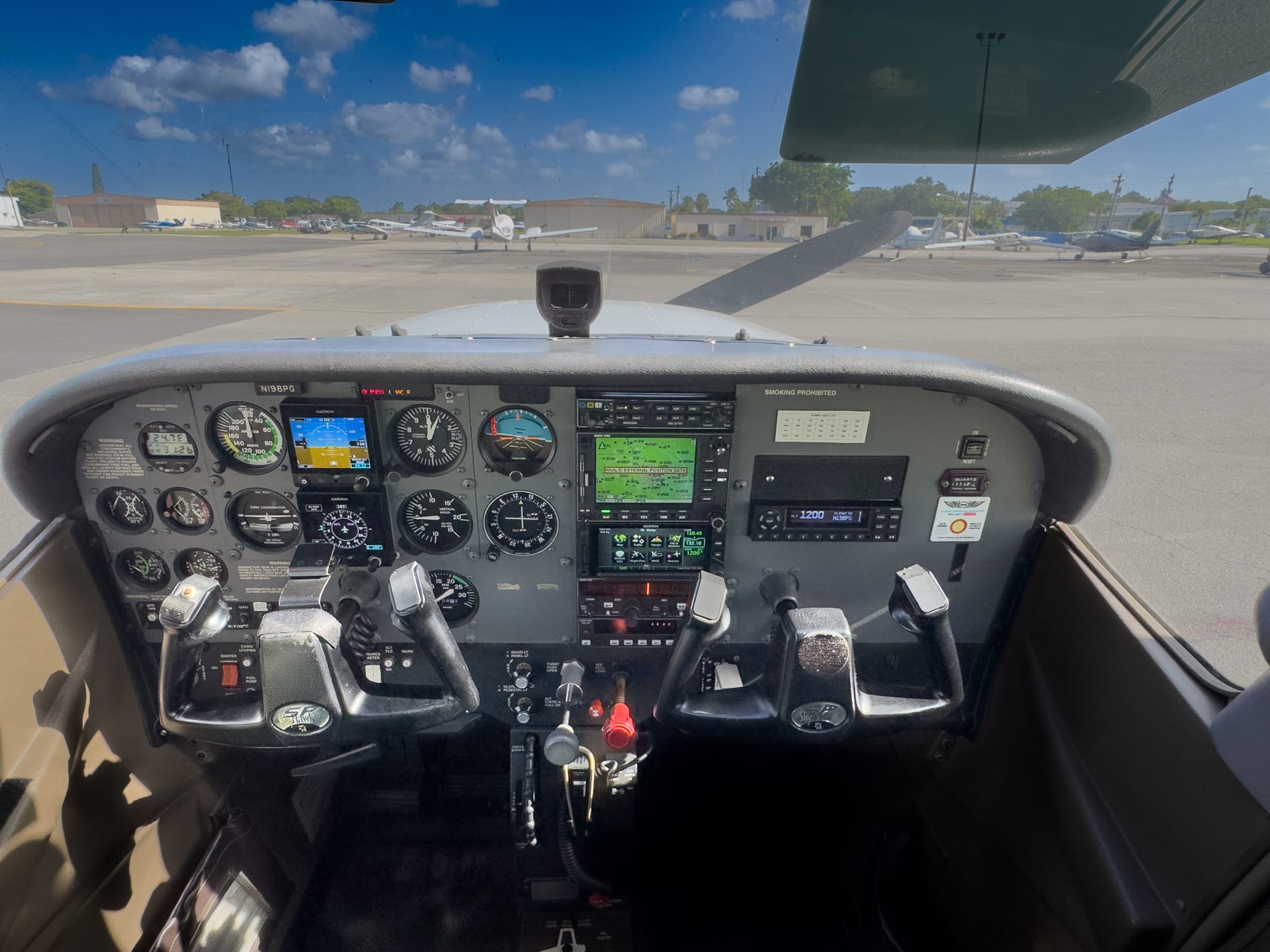
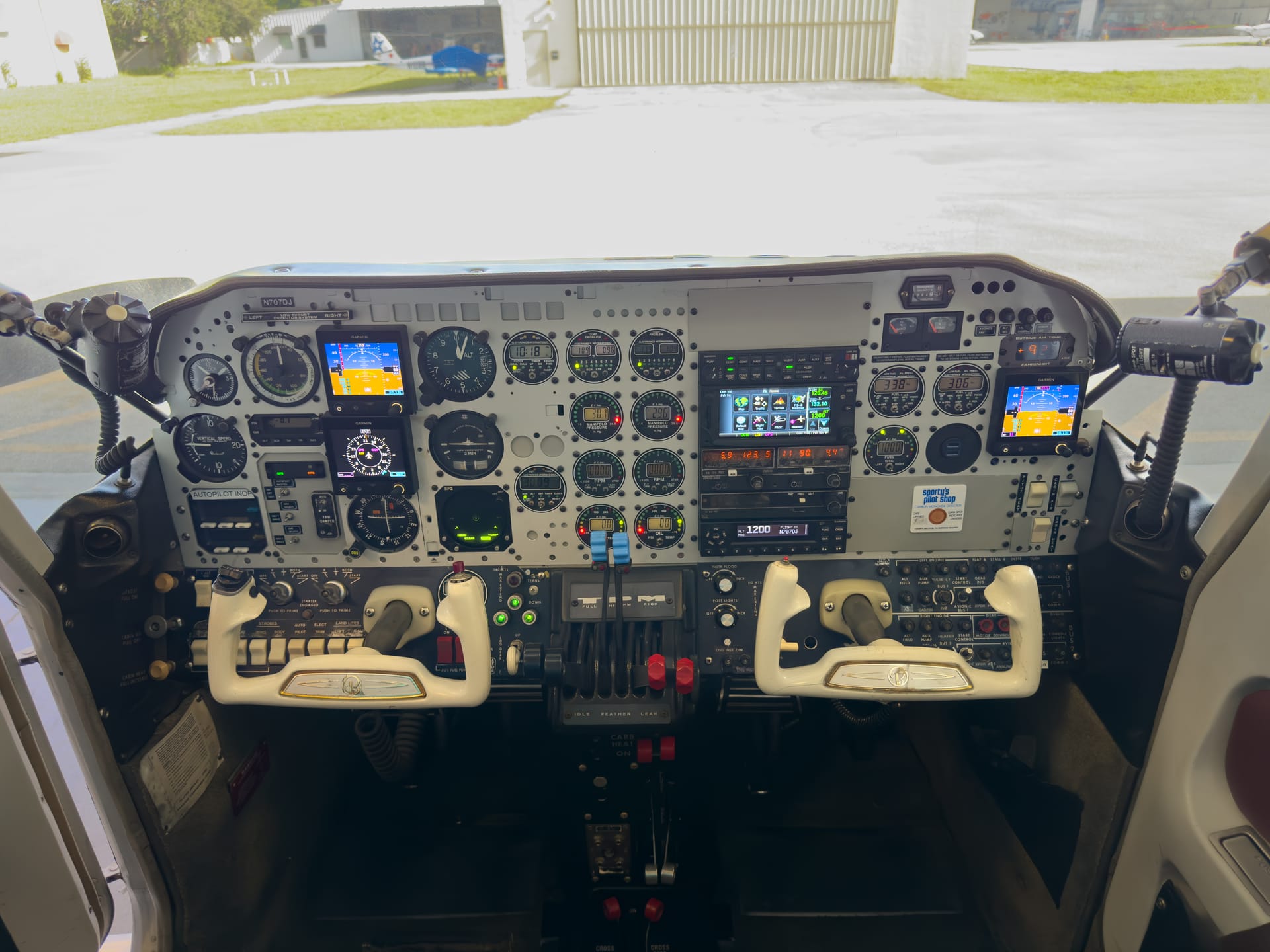
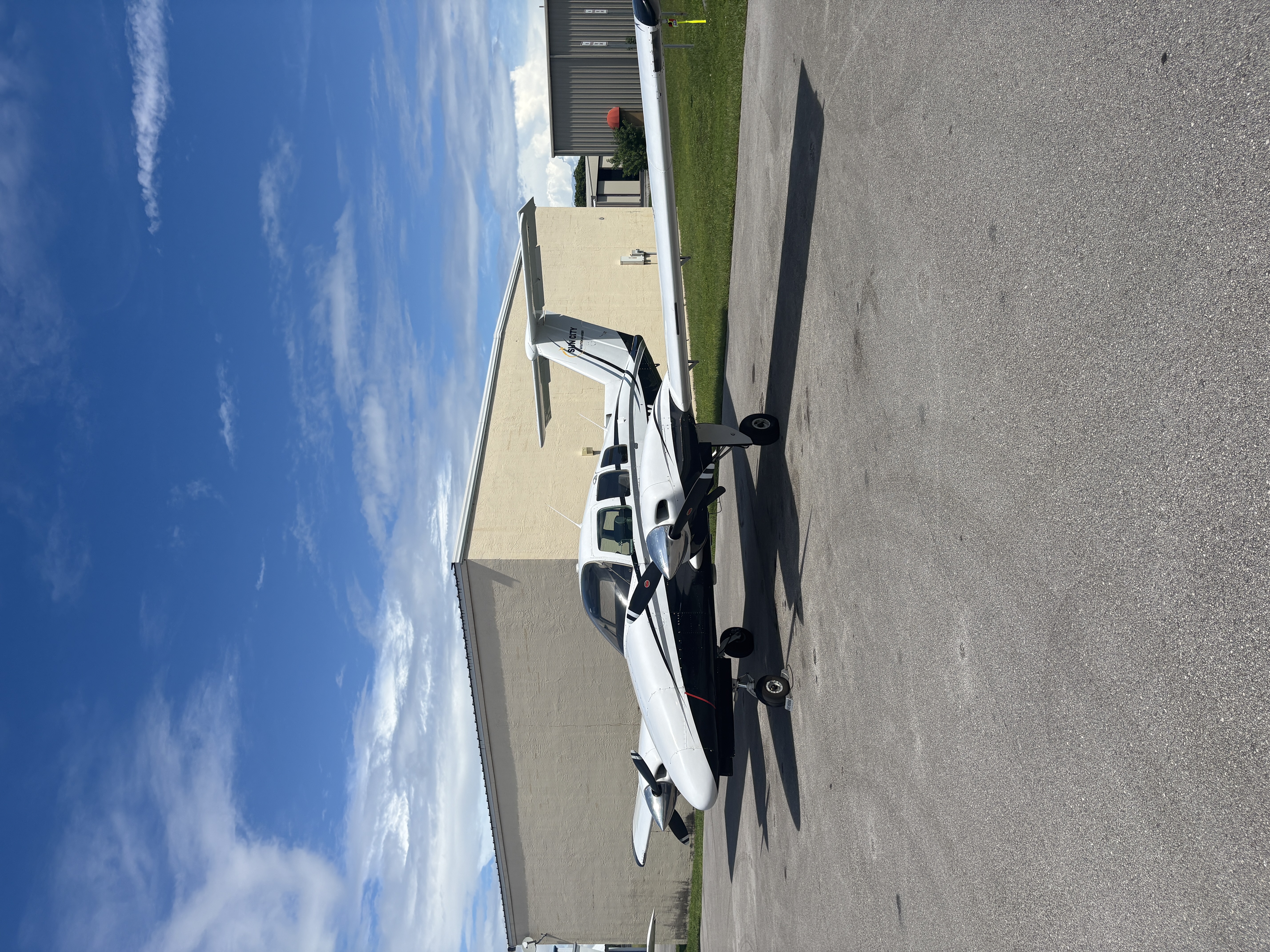
A half flight means one flight one week and two the next. Longer flights cut the number of days you need to find, but a missed one weighs more, because each flight carries more of the week’s hours. When you plan your calendar, choose the flight length first and count the days second. Our Beechcraft Duchess has counter-rotating engines, dual Garmin G5 displays, and a Garmin GTN 750xi, so longer flights give you real time on the avionics you will meet in professional cockpits.
Build Weather and Maintenance Buffers Into the Calendar
South Florida has year-round flying weather, and that helps a block keep moving. Weather, aircraft maintenance, and instructor availability can still move any single flight, at any airport. The 15 percent buffer in the tables is a planning habit that sits unused until the day you need it.
Three habits make the buffer work. Spread the buffer weeks through the calendar instead of saving them all for the end. Fly a little more than the weekly load in the early weeks, while the calendar is open. And when a flight moves, book its replacement before you leave the ramp so the hours slide to a new date instead of disappearing. A long break can add review time before you build again, and a standing buffer keeps breaks short.
Flying out of North Perry Airport (KHWO) puts you near the busy airspace around Miami and Fort Lauderdale, which is useful practice and a reason to plan your slots around real traffic. Read more about our Pembroke Pines location.

Booking Habits That Keep a Schedule Alive
A schedule kept in your head slips, while one built on standing slots holds. Pick the same two days each week, put them on your calendar as recurring events, and treat them like a shift at work. Our post on how lessons fit a working week covers the same rhythm.
A block helps because it turns a series of bookings into one plan. You buy the hours once, and the calendar becomes the only open question. A block is also a large purchase, so settle payment before the first flight. Financing options through Stratus Financial may be available to qualified applicants, and our Stratus Financial page explains how it works. We can talk through how it fits a 3, 6, or 12 month path when you contact us.
Track Your Logbook Against the Plan Every Month
Check the plan against the logbook as you go. Log each flight soon after landing, following the logging rules in 14 CFR 61.51, and keep a running multi-engine subtotal at the bottom of the page.
Then compare the subtotal with the pace. Multiply your weekly load by the flying weeks that have passed, and that is where the logbook should stand. Take the 6-month, 100-hour path at about 4.5 hours a week. After 8 flying weeks you should be near 36 hours. If your logbook says 28, you are about 8 hours behind, which is roughly five flights of 1.5 hours. Spread those five flights across your buffer weeks and the path stays intact.
Once a month, also compare the logbook with your billing record, so the hours you flew and the hours you bought stay in step. If you are building toward the next step in your career, our commercial pilot training program shows where this phase sits in the full path.
How Far Do These Paths Take You Toward 1,500 Hours?
The standard airline transport pilot certificate asks for 1,500 hours of total time, with restricted-privilege pathways for some graduates and military pilots. Eligibility is a milestone, and hiring is a separate step. Adding a multi-engine rating and 25 to 50 multi-engine hours is often a prerequisite for professional pilot jobs, which makes the shorter rows of the table a common first target.
Twin blocks cover part of the distance, and your other flying counts toward total time too. Say you hold 600 total hours. That leaves 900 to go, and the 12-month, 200-hour path covers a little over a fifth of it. Many pilots pair twin blocks with other flying, and flight instruction is a common route. None of it is guaranteed, so plan the weekly load you can hold and let the total build.
Our multi-engine time building roadmap covers how pilots structure those hours, and our seven questions to ask any program helps you compare options before you buy a block.
Questions Pilots Ask About Time-Building Schedules
How long does multi engine time building take?
It takes as long as your weekly flying allows. Target hours divided by hours per week gives the number of flying weeks. The example paths above show 3, 6, and 12 months, and the right one is the row whose weekly load fits your calendar. Our multi-engine training guide walks through the rating that comes first.
How many hours a week should I fly?
Choose a load you can hold for the whole path, because steady weeks beat a big first month followed by a stall. For many working pilots, the 2.3 and 4.5 hour rows are the realistic ones to plan around. See how time building fits alongside other courses in our flight training programs.
Can I finish a block in 3 months?
The arithmetic says a 25-hour block needs about 2.3 hours a week and a 50-hour block about 4.5 over 11 flying weeks. A 100-hour block in 3 months needs about 9 hours a week. Contact us and we will check current schedule availability against your target.
Do I need the rating before I start building hours?
You need the multi-engine rating to act as pilot in command of a twin, so most pilots add it first. Plan for 10 to 15 flight hours before block hours begin. Our multi-engine rating page shows how the add-on and the blocks fit together.
Is there multi engine time building in Florida?
Yes. Our twin flies out of North Perry Airport (KHWO) in Pembroke Pines, which serves pilots across Miami, Fort Lauderdale, Broward, and Miami-Dade. See our Pembroke Pines location for details.
Bring Your Target Date and We Will Build the Weekly Plan
Bring your logbook, your target hours, and the weeks you can fly, and we will turn them into a weekly plan with you. Tell us your target and how many days a week you can fly. Contact us for current block rates and schedule availability.




 More Right Rudder