Multi-Engine Time Building Requirements in 2026: What You Need

Published by:
Amber P.
Published on:
Updated on:
Read time:
7 min read
You have the hours planned and the budget in mind, and then someone at the counter asks for a document you left at home. That moment costs a week, and sometimes more. The multi engine time building requirements are short, and you can check every one of them before you book a single block hour.
Below is the list in the order you will meet it: your certificate, the multi-engine rating, your medical, your flight review, your recent flight experience, the checkout flight, and insurance. If you are missing the rating, the last section shows what to do first. At Sun City Aviation Academy, we fly our twin out of North Perry Airport (KHWO) in Pembroke Pines, so the examples come from that ramp.
Start With the Certificate and the Rating You Hold Today
A multi-engine rating is a class rating added to a pilot certificate. It is not a separate license, and it does not replace the certificate you already hold. Your certificate says who you are as a pilot, and the rating says which class of airplane you may fly as pilot in command.
Our multi-engine add-on starts with at least a private pilot certificate and a valid FAA medical certificate. Many career-track pilots arrive with a commercial pilot certificate already in the logbook, because the commercial rating and the twin rating are commonly the steps right before time building. If you are still earlier on the path, our private pilot training and instrument rating courses come first.
Time building starts after the rating is on your certificate, since the rating is what lets you act as pilot in command of a twin. With the rating in hand, the rest of this list is housekeeping.
Your Medical Has to Match What You Plan to Do
An FAA medical certificate comes in classes, and the class has to match the privileges you exercise. A higher-class medical can cover a lower-class operation while it remains valid for that operation. Dates and durations depend on the class, so read your own certificate before you plan a start date.
Medical eligibility is a question for an Aviation Medical Examiner, not for a flight school or a blog post. If you have a diagnosis, a medication, or a past deferral, talk to an examiner before you spend money on training. The medical exam is also a cost of its own, separate from aircraft hours, so budget for it. Our multi-engine rating page shows where the medical sits in the add-on.
Flight Review: The 24-Month Rule
To act as pilot in command, you generally need a flight review within the preceding 24 calendar months, under 14 CFR 61.56. A flight review is a ground and flight session with an instructor. It shows the instructor you are safe in the airplane before you rent one.
Plan the date backward from your first twin booking. A review that expires in the middle of a block stops your flying until you renew it. Our flight review program can handle it before you start.
Recent Experience: Why Single-Engine Landings Do Not Count in a Twin
Currency is separate from the flight review. To carry passengers, you need three takeoffs and landings in the preceding 90 days, in the same category and class of airplane, under 14 CFR 61.57. The class is the catch. Landings in a single-engine Cessna do not count toward carrying passengers in a multi-engine airplane.
Say you have flown a single-engine airplane every week since your rating, and you hold a flight review and a current medical. You still have no recent twin landings, so you cannot carry passengers in the Duchess until you log three of them. Pilots who build time alone are not affected by the passenger rule, but a long gap away from the twin is still something an instructor will want to see during the checkout.
Skills follow the same logic. A rating earned months ago and not flown since gets rusty where it matters most, in engine-out procedures and one-engine approaches. Regular twin flying keeps the paperwork and the skill in step. Our schedule guide shows how weekly flying keeps both alive.

The Checkout Flight Before You Rent a Twin
Many operators ask a renter to complete a checkout flight with an instructor before the first solo rental. A checkout gives the instructor a look at how you handle that specific airplane, and gives you a first look at its systems and procedures.
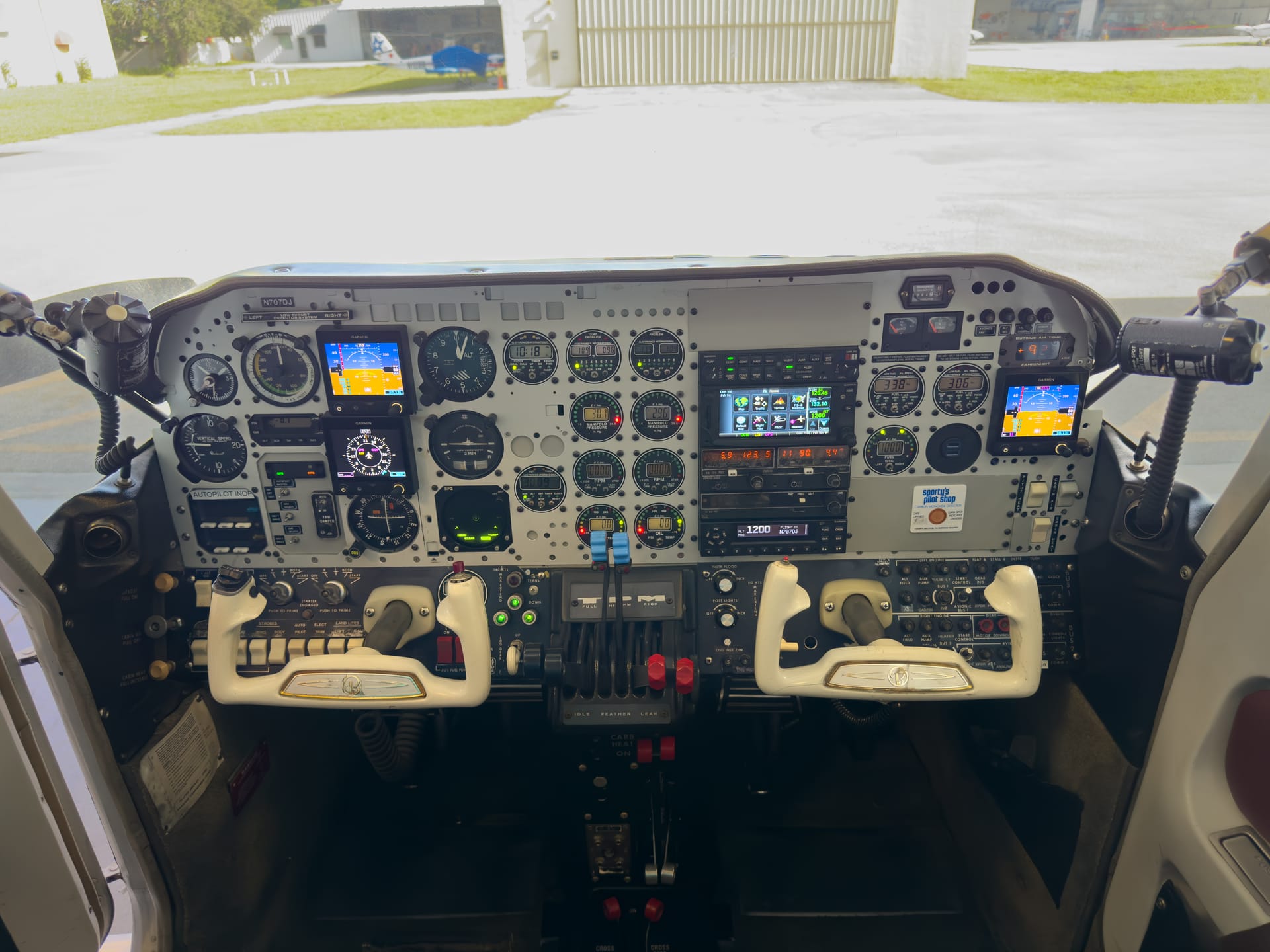
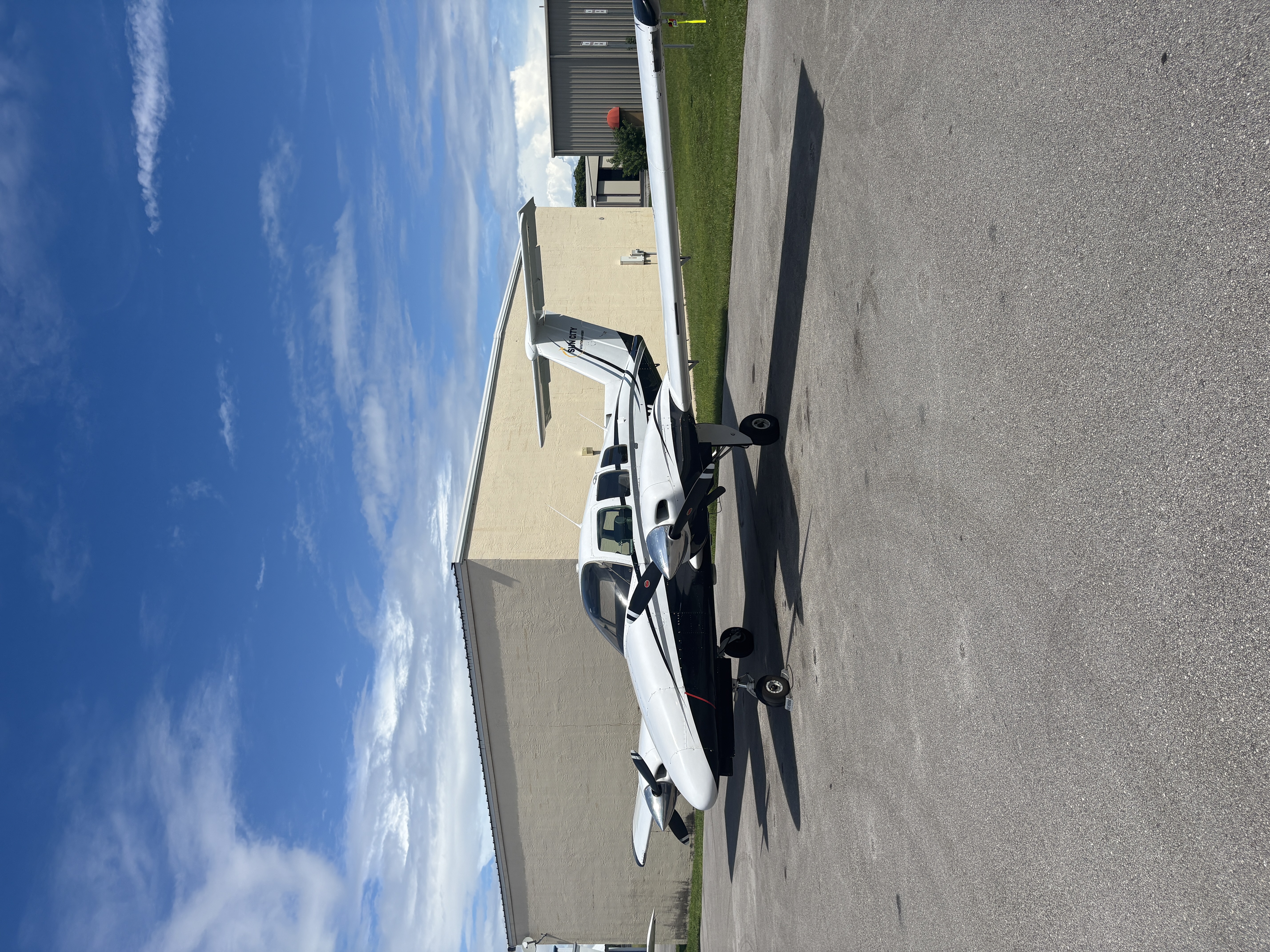
The checkout details vary by school and insurer, including the hours and who flies with you. Our Beechcraft Duchess has counter-rotating engines, dual Garmin G5 displays, and a Garmin GTN 750xi, so part of any checkout is learning that avionics layout. Contact us for the checkout that applies to our Duchess.

Insurance: The Requirement Most Pilots Forget
Insurance decides who pays if something goes wrong, and it varies by school and insurer. Some operators cover renters under the school’s policy. Others ask you to carry your own renter’s policy, and either way the policy is a cost line of its own. A rental quote tells you little until you know which policy applies.
Before you buy a block, ask every program the same questions. What policy covers the airplane while you fly it? Does the policy depend on your total time or multi-engine time? Who pays any deductible? Our guide to the seven questions to ask any program puts insurance and checkout on the same checklist as aircraft and schedule. Contact us for the insurance details that apply to our Duchess.
Your Readiness Checklist Before You Book the First Block Hour
Use the table as a final pass. Each row is a question you can answer in one sitting.
| Requirement | What you should be able to say | Where to start |
|---|---|---|
| Certificate | I hold at least a private pilot certificate | Commercial pilot training |
| Multi-engine rating | The rating is on my certificate | Multi-engine rating |
| Medical | My FAA medical is valid for what I plan to do | An Aviation Medical Examiner |
| Flight review | My review is inside 24 calendar months | Flight review |
| Twin recency | I have three twin landings in 90 days if I carry passengers | Our Beechcraft Duchess |
| Checkout | I know what checkout my program asks for | Contact us |
| Insurance | I know which policy covers the airplane | Contact us |
Fill in every row and you are ready to book. If one row is empty, fix it first. Our cost guide explains the hourly lines you will see once you are ready to book.
No Multi-Engine Rating Yet? Here Is the First Step
Start with the add-on. Our multi-engine add-on runs $4,100 to $6,100, and FAA fees vary and additional training may be required. Most pilots complete it in 10 to 15 flight hours, and the training starts in our Redbird simulator before you move to the Duchess. Ground training covers multi-engine aerodynamics, engine-out procedures, Vmc calculations, systems, and weight and balance. Flight training covers single-engine emergency handling, stalls, steep turns, and instrument approaches on one engine.
The simulator earns its place because asymmetric thrust takes repetition. A Redbird lets you practice the same simulated engine failure again and again, so the sequence is familiar before you fly it in the airplane.
Funding is part of the plan. Financing options through Stratus Financial may be available to qualified applicants, and our Stratus Financial page explains the process. Adding a multi-engine rating and 25 to 50 multi-engine hours is often a prerequisite for professional pilot jobs, so many pilots go straight from the rating into a block. Our blocks come in 25, 50, and 100 hours.

Questions Pilots Ask About Multi-Engine Time Building Requirements
What are the requirements for multi engine time building?
You need a pilot certificate with the multi-engine rating, a valid FAA medical, a current flight review, and recent experience if you carry passengers. Checkout and insurance depend on the school and insurer. Our multi-engine training guide walks through the rating itself.
What are the multi engine rating requirements?
Our add-on starts with at least a private pilot certificate and a valid FAA medical certificate. Most pilots finish it in 10 to 15 flight hours. See the multi-engine rating page for the full outline.
Do I need a commercial certificate to start time building?
Many time builders hold one, since the twin hours usually follow commercial training. Whether a program accepts a private certificate depends on the school and the insurer. Contact us and we will talk through your certificate and goals.
Does my flight review expire during a block?
Look at the date of your last flight review. If it will lapse inside the window of your block, renew it before you start. We can schedule your flight review before the block begins.
Is there multi engine time building in Florida?
Yes. Our twin flies out of North Perry Airport (KHWO) in Pembroke Pines, which serves pilots across Miami, Fort Lauderdale, Broward, and Miami-Dade. See our Pembroke Pines location.
How does this fit the 1,500-hour path?
The standard airline transport pilot certificate asks for 1,500 hours of total time, with restricted-privilege pathways for some graduates and military pilots. Twin hours are one part of that total. Our multi-engine time building roadmap shows how pilots structure the hours.
Bring Your Logbook and We Will Check the List With You
Bring your certificate, your medical, and your logbook, and we will go through the checklist with you before you buy a block. Tell us which rows are done and which are open. Contact us to confirm what you need before your first twin hour.


 More Right Rudder