Multi-Engine Time Building
FAQ in 2026
Quick answers on multi-engine time building in Florida: cost, hours, aircraft, requirements, and how to book your hours in our Beechcraft Duchess at North Perry Airport.
FAQ
Quick Answers on Multi-Engine Time Building in Florida
Short answers on cost, requirements, schedule, and booking, with links to the full guides. Where a number depends on your plan, our team has the current details.
Multi-engine time building is flying a multi-engine airplane to log multi-engine hours after you hold the rating. Adding a multi-engine rating and 25 to 50 multi-engine hours is often a prerequisite for professional pilot jobs, which is why many career-track pilots build those hours before they apply. At Sun City Aviation Academy you build them in our twin-engine Beechcraft Duchess, and our multi-engine rating page shows the full program.
No. A multi-engine rating is a class rating added to your pilot certificate, so there is no separate multi-engine license. Once you hold it, you can act as pilot in command of a twin. Our add-on course is how you earn it with us, and our requirements guide lists what to have in place first.
A block hour is one hour inside a prepaid package of aircraft hours. Our block packages come in 25, 50, and 100 hours, and they carry discounted rates compared with booking hour by hour. A block turns a series of single bookings into one plan, and you can contact us for current block rates and schedule availability.
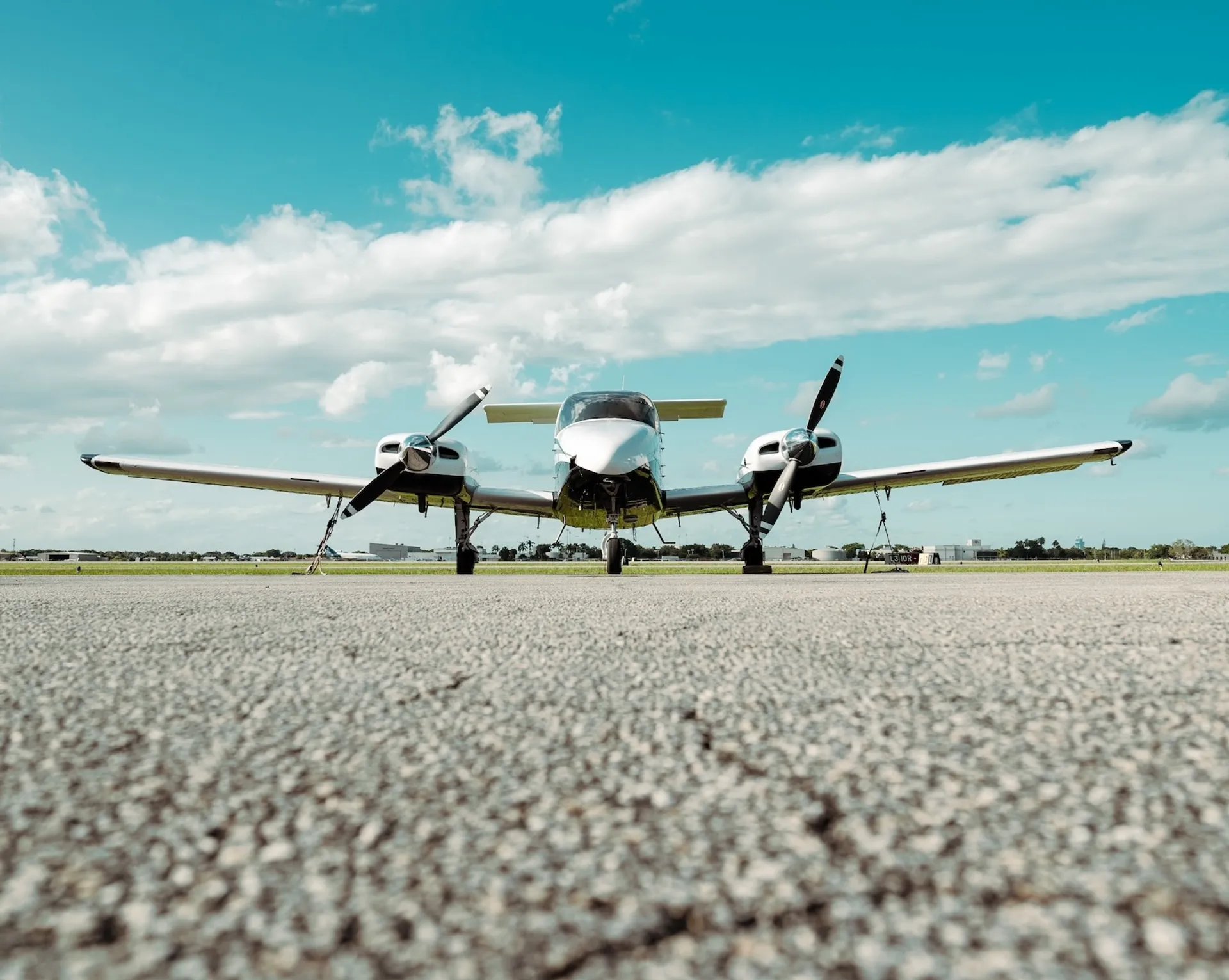
You fly our Beechcraft Duchess, a twin with counter-rotating engines, dual Garmin G5 displays, and a Garmin GTN 750xi. Two engines mean two fuel flows, which is why a twin generally costs more per hour to operate than a single-engine airplane. You can see it on our Beechcraft Duchess page.
Our multi-engine add-on runs $4,100 to $6,100; FAA fees vary and additional training may be required. Time-building hours are priced in blocks of 25, 50, and 100 hours, so contact us for current block rates and schedule availability. Our cost breakdown walks through every line of the total, and financing options through Stratus Financial may be available to qualified applicants.
Your total depends on five lines: the aircraft rate, instructor time, fuel, insurance, and how steadily you fly. Instructor time is billed separately from aircraft time, and whether a quote includes fuel varies by operator. Put the same five lines side by side whenever you compare quotes, and contact us to walk through the lines that apply to our Duchess.
The FAA lets a pilot share certain costs, and under 14 CFR 61.113 the pilot must pay at least a pro rata share of the fuel, oil, airport expenses, or rental fees on a flight with passengers. How each pilot logs the flight follows 14 CFR 61.51, which is a separate rule, so confirm the arrangement and your logging with an instructor before you fly. Contact us to ask how safety-pilot flights work in our Duchess.
Our multi-engine add-on starts with at least a Private Pilot Certificate and a valid FAA medical certificate. If you have a medical question, talk to an Aviation Medical Examiner. For time-building blocks, contact us so we can confirm what applies to your certificate, and use our requirements guide to check everything else.
You generally need a flight review within the preceding 24 calendar months to act as pilot in command (14 CFR 61.56). To carry passengers, you need three takeoffs and landings in the preceding 90 days in the same category and class (14 CFR 61.57), so single-engine landings do not count toward passenger currency in a twin. If your review is due, see our flight review page.
Many operators require a checkout flight before you rent a twin, and checkout and insurance requirements vary by school and insurer. Hours and terms differ, so confirm both before you set your budget. Contact us for the details that apply to our Duchess.
Most pilots complete the add-on in 10 to 15 flight hours, and training begins in our Redbird simulator. Ground training is additional to those flight hours. As an example, flying 3 hours a week puts 10 to 15 flight hours at about 3 to 5 weeks, and ground training and your checkride are scheduled separately.
Divide your target hours by your flying weeks. For example, 50 hours over six months is 26 weeks; hold back about 15 percent for weather and maintenance and you have 22 flying weeks, or about 2.3 hours a week. Year-round flying weather helps a block keep moving, and a weather or maintenance day can still move a flight, so build in a buffer. Our schedule guide has 3-, 6-, and 12-month tables.
Start by telling us how many multi-engine hours you need and how often you can fly. We will help you choose a block size and confirm current block rates and schedule availability. Use our contact page to begin, and book your next flight before you leave each session so your weekly slot stays steady.
Every hour you log counts toward total time, but only time in a multi-engine airplane builds multi-engine time. Generally, a single-engine airplane costs less per hour to operate than a twin. Our fleet includes Cessna 172s and a Beechcraft Duchess, so contact us for current rates on either airplane, and read our Duchess vs Cessna 172 comparison for the full side-by-side.
Compare programs on the same assumptions: the same aircraft, the same included fees, and the same location. Ask what a quote includes for fuel, instructor time, and insurance, and ask about checkout requirements and schedule availability. Our seven questions guide gives you the full checklist, and we will answer each one for our program.
The standard airline transport pilot certificate asks for 1,500 hours of total time, with restricted-privilege pathways for some graduates and military pilots. Your other flying counts toward total time too, so twin blocks cover part of it. Eligibility is a milestone, and hiring is a separate step.
Our multi-engine flying happens at North Perry Airport (KHWO) in Pembroke Pines, close to the busy airspace around Miami and Fort Lauderdale. Our Duchess flies from KHWO, and year-round flying weather helps a block keep moving. Our locations page has the details for each place we train.
Bring Your Questions to the Airport
Start With a Discovery Flight
The clearest way to choose your training path is to see the aircraft, meet the environment, and talk through your goal with the team.
 More Right Rudder