Commercial Single-Engine vs. Multi-Engine Initial: The Most Efficient Certification Route
Published by:
Georgette P.
Published on:
Updated on:
Read time:
6 min read
When planning your transition into professional aviation, earning a Commercial Pilot Certificate is the mandatory legal step that allows you to fly for compensation or hire. However, one of the most important strategic decisions you will make is the sequence of your commercial ratings:
Should you take your initial commercial checkride in a single-engine aircraft (Commercial Single-Engine Initial) and add a multi-engine rating later, or should you take your initial checkride in a twin-engine aircraft (Commercial Multi-Engine Initial)?
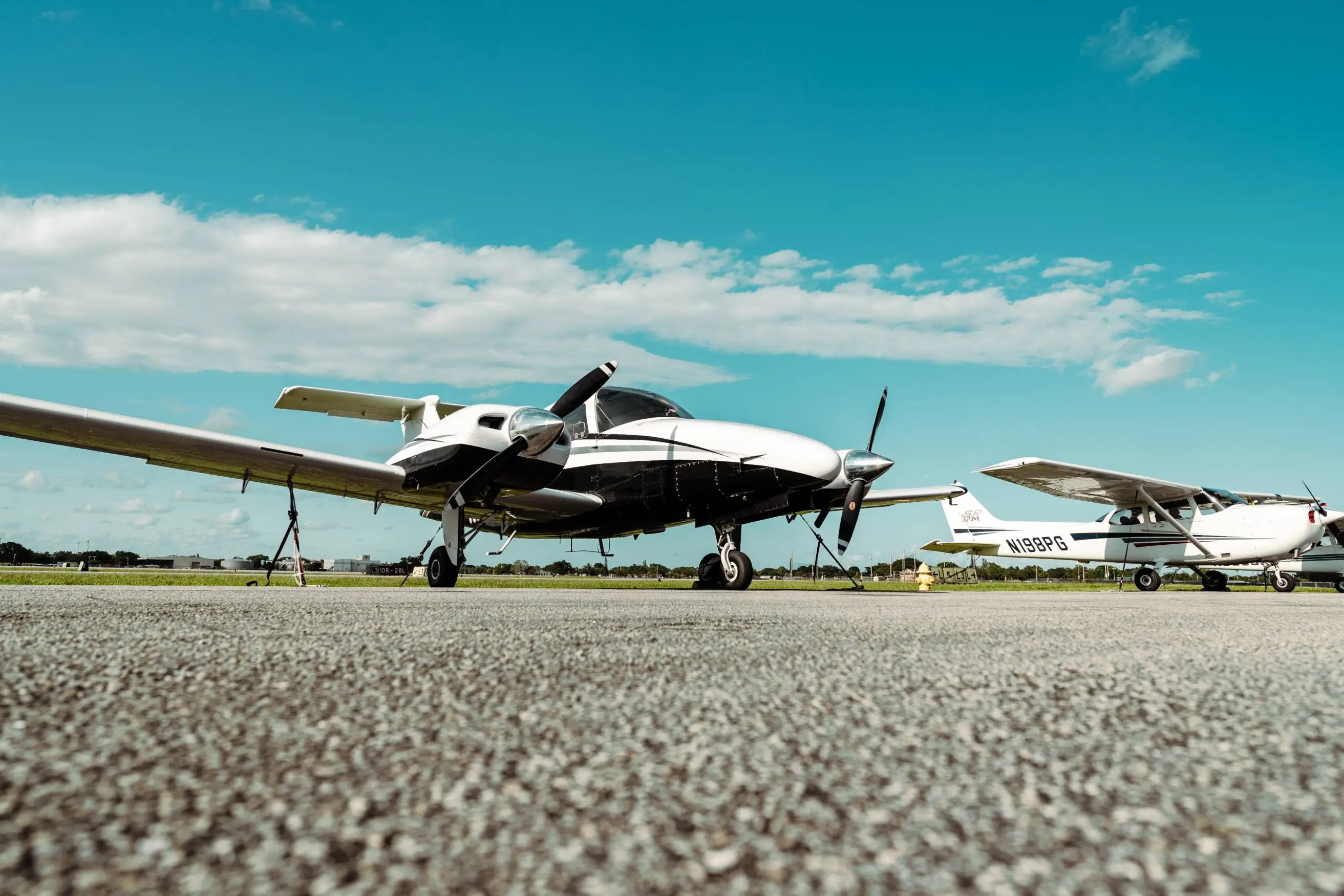
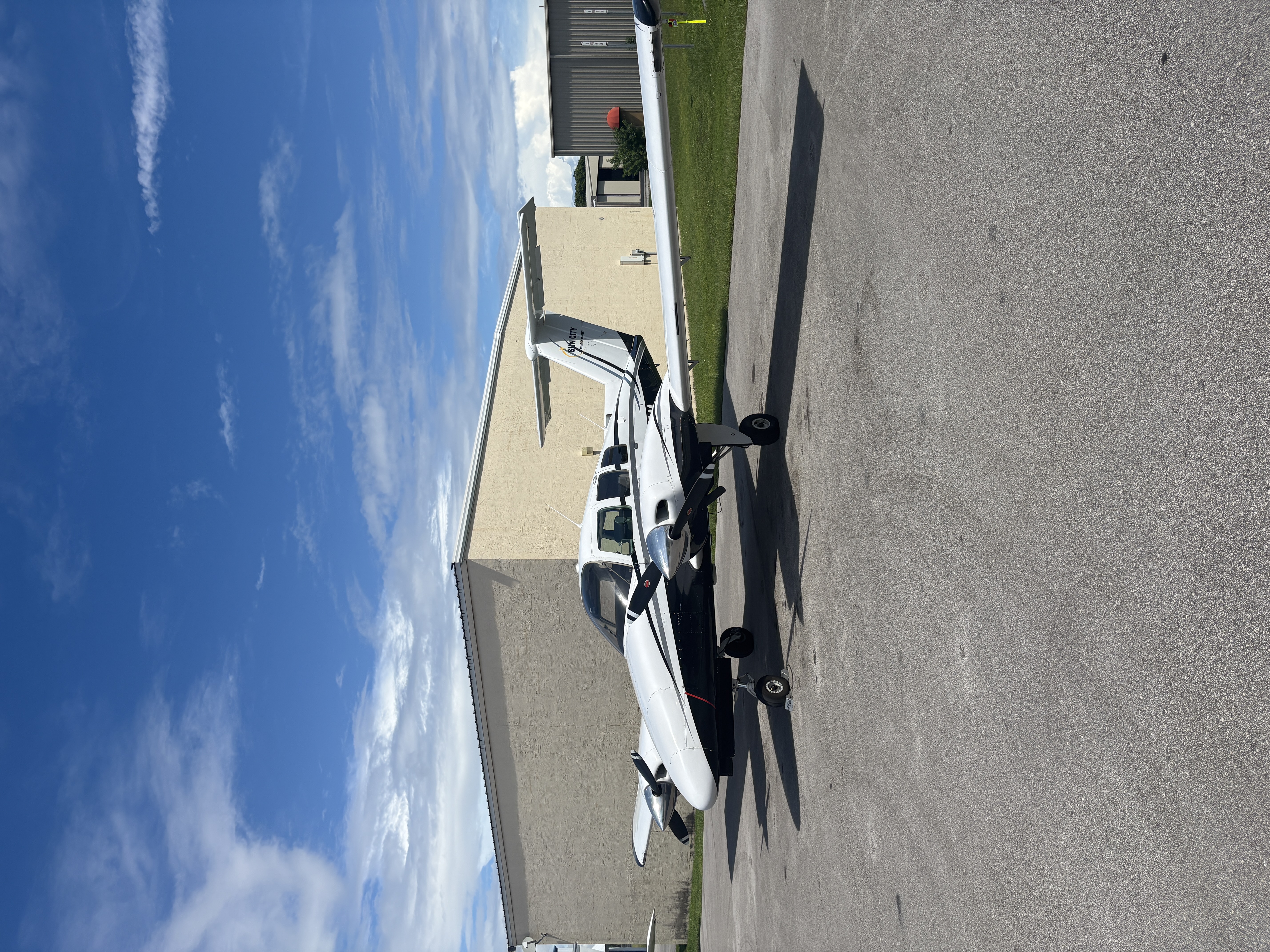
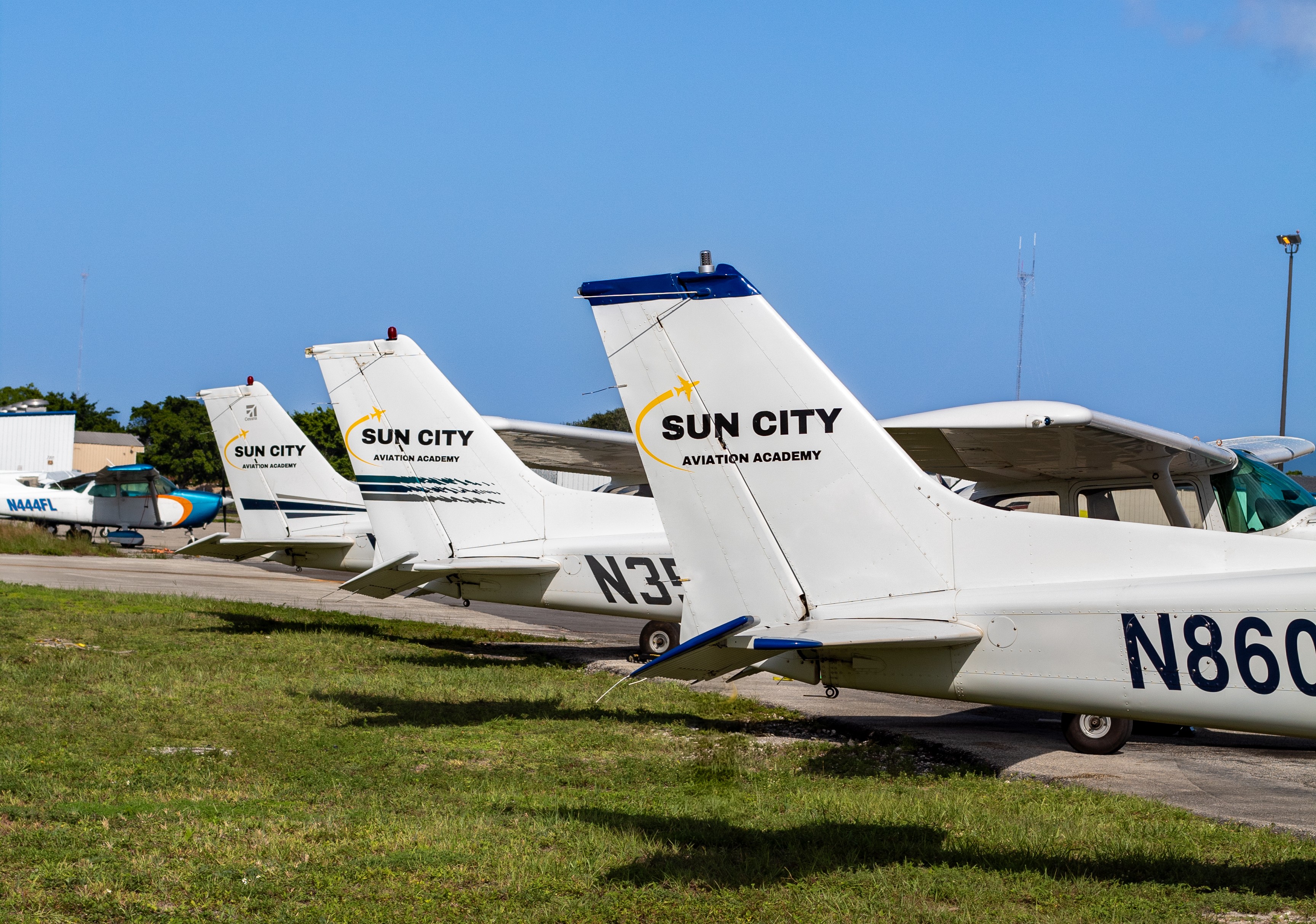
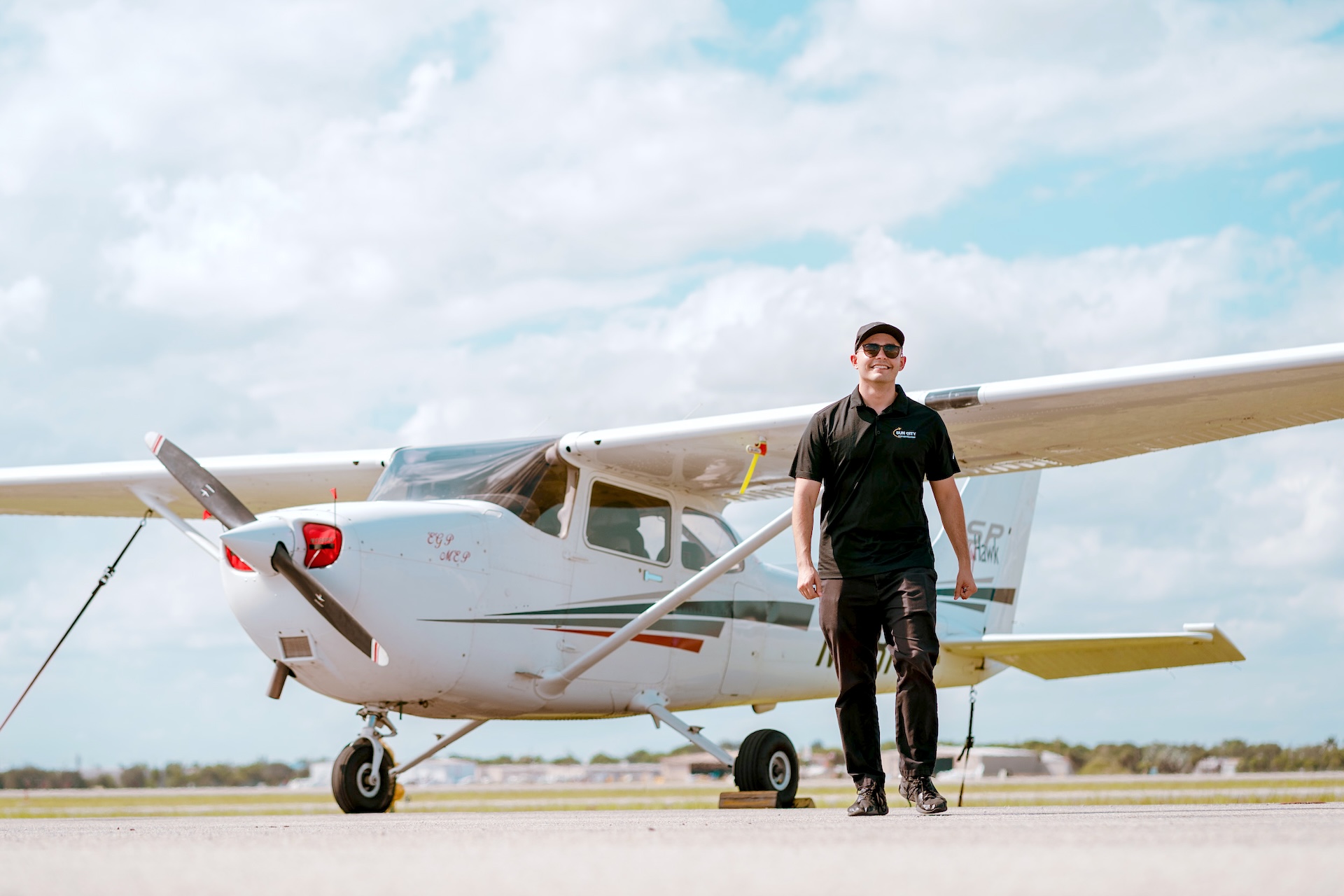
At Sun City Aviation Academy in Pembroke Pines, Florida, we train career pilots across both our single-engine Cessna 172 fleet and our twin-engine Beechcraft Duchess. Here is why completing the Commercial Single-Engine Initial first followed by an accelerated Multi-Engine Add-On is the most cost-effective and tactically sound route for aspiring professional pilots.
1. Substantial Training Cost Savings
The core commercial flight training syllabus requires at least 20 hours of dedicated dual commercial flight instruction, including complex maneuvers, cross-country flights, night navigation, and checkride preparation.
Renting a twin-engine aircraft costs significantly more per hour than a single-engine trainer due to dual fuel burns, twin engine maintenance reserves, and higher insurance premiums.
- Option A (Single-Engine Initial + Multi-Engine Add-On): You log your 20+ hours of commercial dual preparation in our cost-efficient Cessna 172s, mastering steep spirals, lazy eights, and accuracy landings at standard single-engine rates. Once licensed, your Multi-Engine Add-On requires only 10 to 15 flight hours in the Beechcraft Duchess.
- Option B (Multi-Engine Initial + Single-Engine Add-On): You must conduct all 20+ hours of commercial training in the twin-engine aircraft, dramatically inflating your total training budget.
By completing your initial certificate in a single-engine aircraft, most students save between $3,000 and $6,000 in aircraft rental expenses while graduating with the exact same commercial credentials.
Explore our Commercial Pilot Course and review our comprehensive Florida commercial pilot guide to map out your training plan.
2. Reduced Maneuver Complexity on Your Initial Checkride
The initial Commercial Pilot practical test is comprehensive. Under the FAA Commercial Pilot Airman Certification Standards (ACS), examiners test high-precision commercial maneuvers including:
- Lazy Eights and Chandelles: Requiring coordinated pitch and roll control while constantly varying airspeed and bank angles.
- Eights-on-Pylons: Requiring precise ground-reference tracking around visual pivot points.
- Power-Off 180° Accuracy Landing: Requiring an engine-idle glide from traffic pattern altitude to a precision touchdown within a 200-foot runway marker.
Practicing and executing these demanding maneuvers in a responsive, forgiving Cessna 172 allows you to build stick-and-rudder precision without managing the higher airspeeds, complex twin-engine power levers, and asymmetric drag of a multi-engine platform.
3. Streamlined Add-On Practical Test (No Second Written Exam)
Under 14 CFR 61.63(c), once you hold an initial Commercial Pilot Certificate in one aircraft category and class, adding an additional category or class rating does not require taking a second FAA written knowledge test.
Your Multi-Engine Rating Add-On focuses purely on twin-engine flight dynamics:
- Single-engine aerodynamics
- Engine-out emergency procedures, feathered propeller management, and securing a failed engine
- Single-engine instrument approaches and single-engine go-arounds
- Short-field and soft-field multi-engine takeoffs and landings
Because you already hold a commercial certificate, your examiner tests only the multi-engine-specific tasks during the add-on checkride.
Have questions regarding commercial prerequisites or checkride requirements? Visit our commercial pilot training FAQ for comprehensive answers.
4. Faster Transition into Flight Instructing (CFI)
For pilots planning to build hours toward the 1,500-hour airline minimums as a Certified Flight Instructor, holding a Commercial Single-Engine rating allows you to take your initial CFI practical test immediately.
Because the vast majority of primary student pilot training in the United States occurs in single-engine aircraft, single-engine CFIs are in highest demand by flight schools. Once instructing and earning an income, you can subsequently add your Multi-Engine Instructor (MEI) rating as your career progresses.
Start Your Commercial Pilot Journey at Sun City Aviation
Choosing the Single-Engine Initial and Multi-Engine Add-On pathway gives you the fastest, most economical route to becoming a fully certified commercial multi-engine pilot.
At Sun City Aviation Academy in Pembroke Pines, Florida, our experienced instructors and well-maintained fleet at North Perry Airport (KHWO) provide the structured mentorship you need to succeed.
Contact Sun City Aviation Academy today to discuss your commercial pilot career roadmap and schedule your initial flight training session.

 More Right Rudder