Flight School South Florida vs Central Florida: 2026 Guide
Published by:
Amber P.
Published on:
Updated on:
Read time:
7 min read
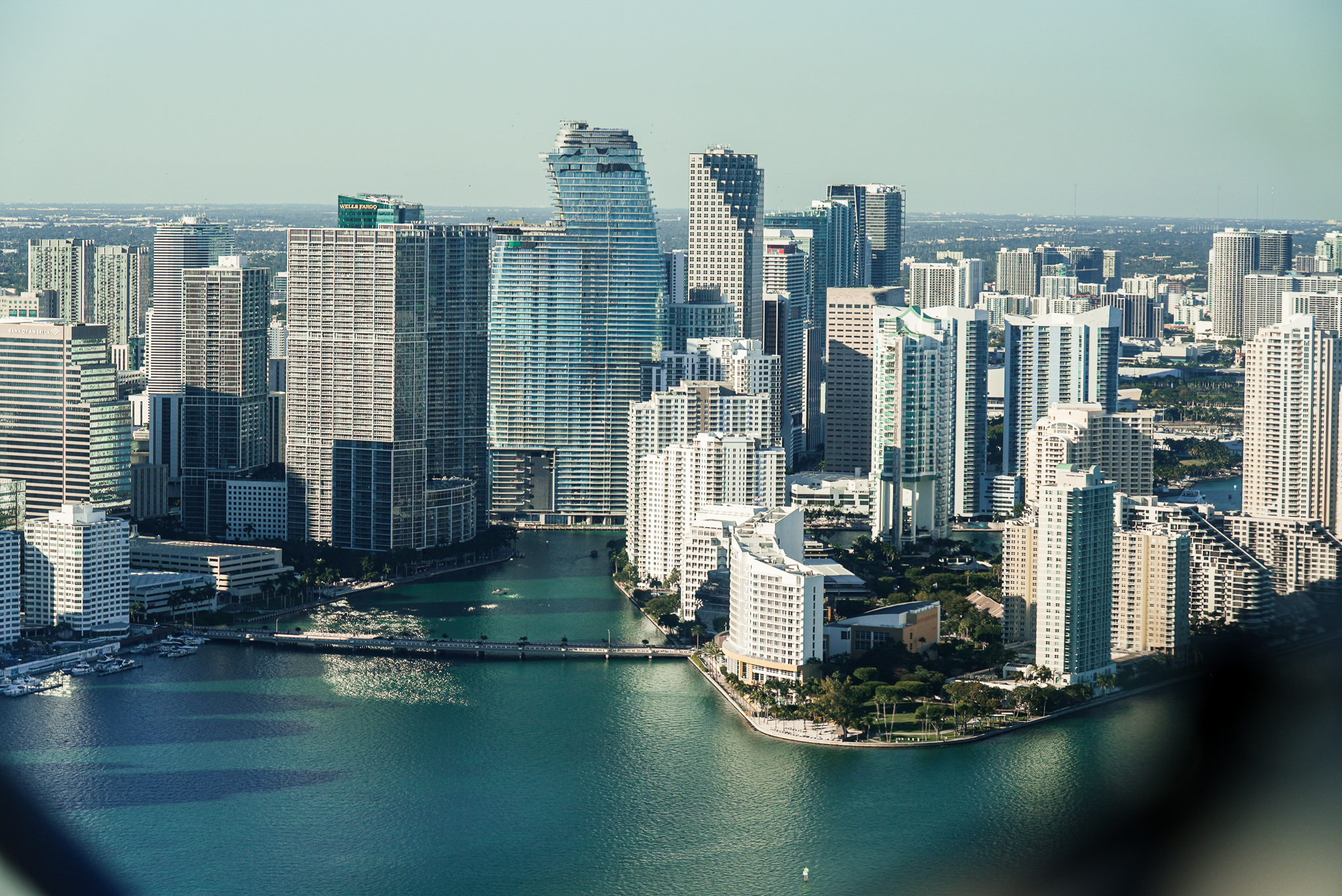
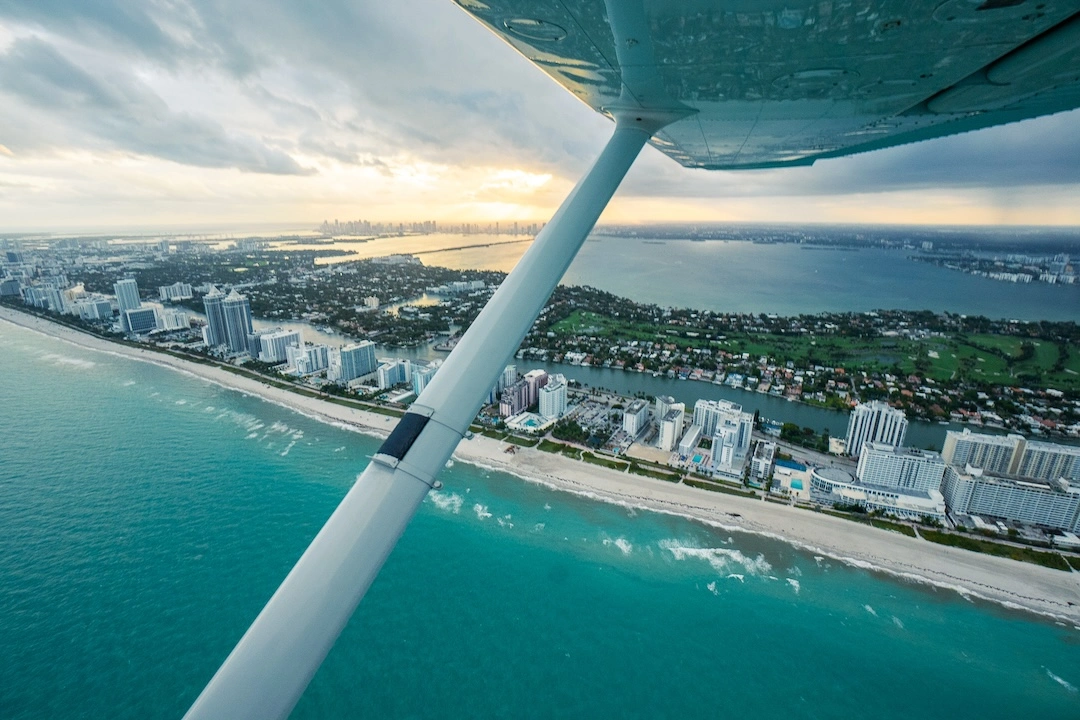
If you are comparing flight school South Florida vs Central Florida, you are really comparing two different training environments. One puts you closer to busy coastal airspace, dense airport operations, and year-round training momentum. The other may feel quieter at first, especially if you want a slower inland pace.
The better choice depends on your goal. If you want career-track training, regular air traffic control practice, and exposure to complex airspace early, South Florida has a strong training case. If you want a calmer first step, ask how an inland school will prepare you for busier airspace, radio work, and cross-country decisions.
Flight School South Florida vs Central Florida: Quick Comparison
A comparison should start with the environment, not the brochure. Sun City Aviation Academy is based at North Perry Airport in Pembroke Pines and serves South Florida areas including Miami, Fort Lauderdale, Hollywood, and Pembroke Pines. Its Pembroke Pines base gives students exposure to busy Class B airspace near Miami International and Fort Lauderdale airports.
For a student, that means radio work, traffic scanning, and airspace planning are part of normal training. Choose South Florida if you want controlled airspace to feel routine.
| Decision factor | South Florida training environment | What to ask a quieter Central Florida or inland school |
|---|---|---|
| Weather and pace | South Florida provides over 300 flyable days per year. | How often does weather cancel lessons, and what keeps training moving? |
| Controlled airspace | KHWO gives exposure to busy Class B airspace near Miami International and Fort Lauderdale. | How early will you practice complex airspace and ATC communication? |
| Airport environment | North Perry Airport puts training near a busy South Florida aviation corridor. | Will the quieter pace still prepare you for busier airports later? |
| Program structure | Sun City offers both FAA-approved Part 141 programs and flexible Part 61 programs. | Does the school match your schedule, certificate goal, and learning pace? |
| Career path | Sun City lists programs from Private Pilot through ATP, CFI, and multi-engine training. | Can one school support your next rating after your first certificate? |
Weather and Training Pace Shape Your Calendar
Weather affects how often you fly, how fresh each lesson feels, and how much time you spend relearning skills after long gaps. South Florida’s climate provides over 300 flyable days per year, which helps students train without the winter weather delays that slow many other regions.
Frequent flying helps skills stay warm. A student who flies on a steady schedule can build cockpit flow, radio habits, checklist discipline, and landing judgment with less interruption.
Central Florida may still offer a workable training calendar, but ask direct questions about cancellations, simulator use, and rescheduling. Sun City uses an FAA-approved Redbird Full-Motion Flight Simulator, classified as an Advanced Aviation Training Device, to help maintain momentum when weather or Temporary Flight Restrictions interrupt flying. Pick the school that can explain how it protects your rhythm when the forecast changes.
Controlled Airspace Builds Radio Confidence
Controlled airspace means airspace where air traffic control provides services under specific rules. The FAA’s Pilot’s Handbook of Aeronautical Knowledge is a useful reference for airspace classes and airport operations.
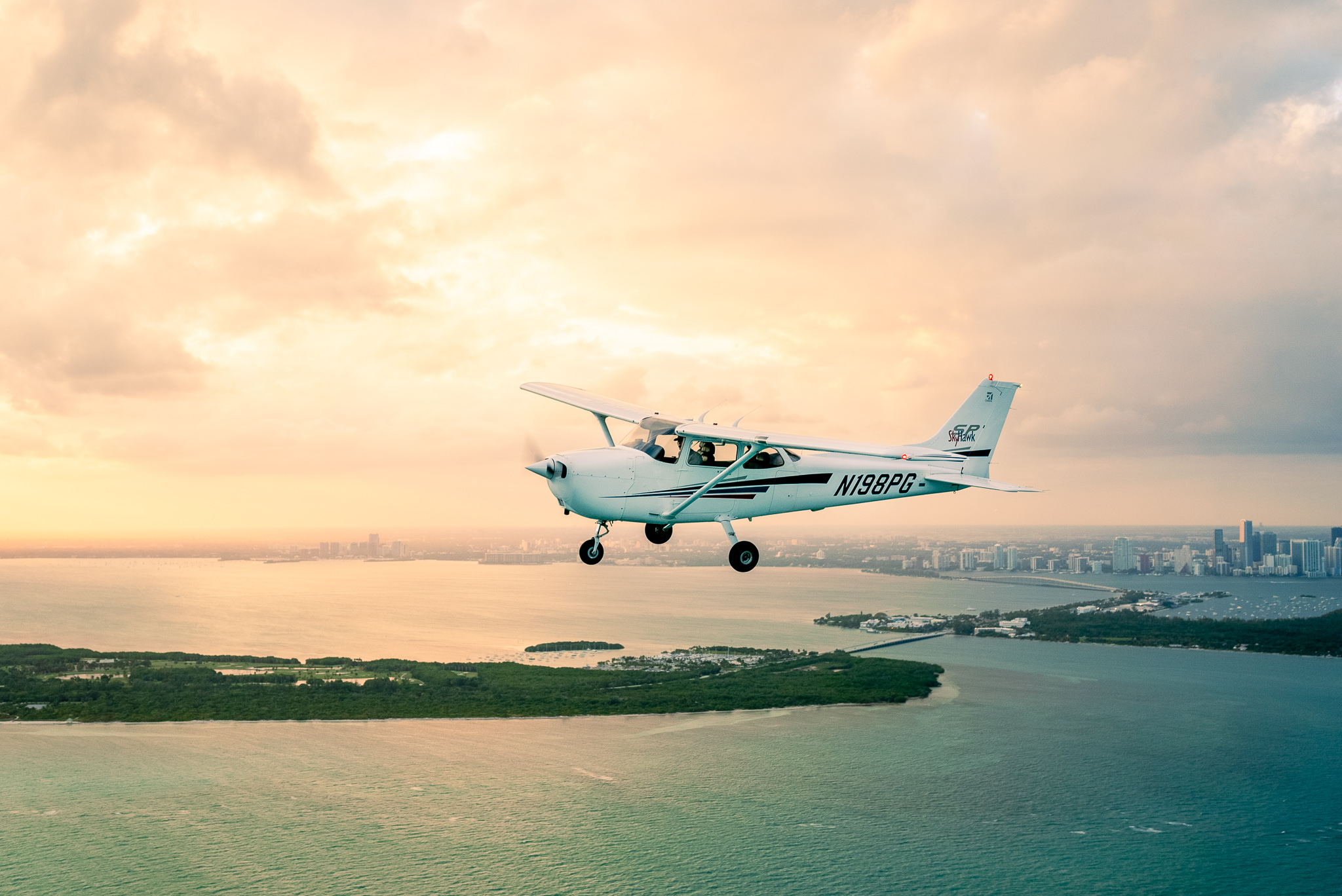
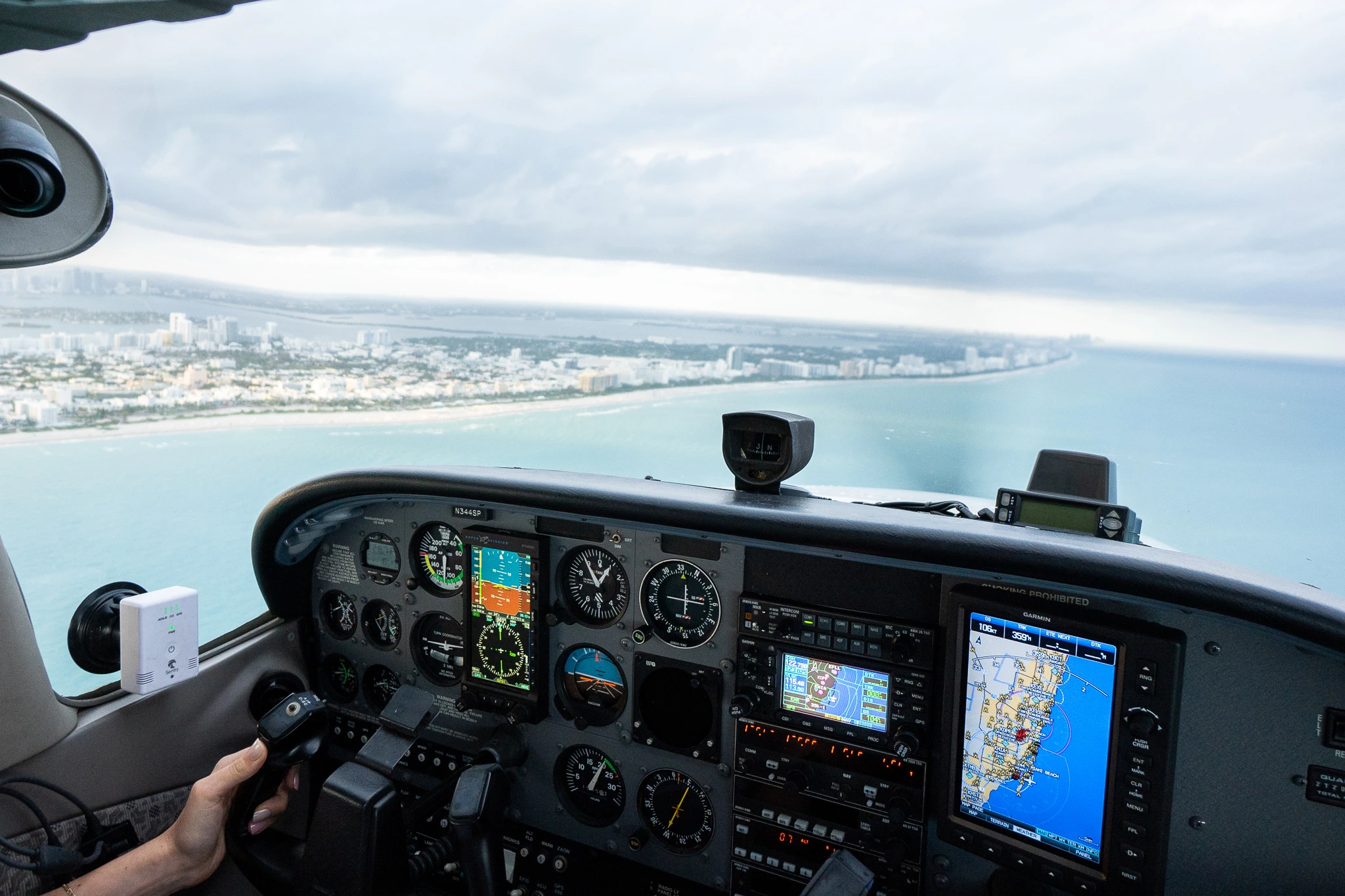
At Sun City’s Pembroke Pines base, students train at KHWO near the busy Class B airspace around Miami International and Fort Lauderdale airports. That is a real difference from a quieter inland training environment. You learn to listen, speak clearly, follow instructions, and plan routes while other aircraft and controllers are part of the picture.
This can feel demanding at first. That is also the benefit. A student who trains in a more complex airspace environment gets repeated practice with habits that career-track pilots need later. If your goal includes professional flying, treat busy airspace as part of the training value.
Coastal Airport Density vs a Quieter Inland Pace
South Florida training has a different feel from a quiet inland airport. At KHWO, you are based at North Perry Airport in Pembroke Pines, close to the Miami and Fort Lauderdale aviation environment. Lessons can require more planning, more radio awareness, and a sharper sense of nearby controlled airspace.
That helps if you want your private pilot training to build habits you can carry into instrument training and later commercial work. You learn to fly the aircraft and think ahead in a busier system.
A quieter Central Florida or inland school may feel less intense in the first few lessons. The question is whether that school has a clear plan to build you into more demanding environments before checkride and cross-country flying. Choose the easier-feeling environment only if it still gives you a path into the harder skills.
Match the Region to Your Career Goal
Your certificate goal should drive the location choice. Sun City Aviation Academy is an FAA Part 141 Certified Flight School and also provides flexible Part 61 training programs. Because of the Part 141 certification, the school is authorized to graduate students with fewer minimum flight hours for certain licenses compared to traditional Part 61 flight schools.
That matters if you are planning a full training path instead of a one-off certificate. Sun City’s listed programs include Private Pilot, Instrument Rating, Commercial Pilot, Multi-Engine Rating, Certified Flight Instructor paths, Airline Transport Pilot, Flight Review, IPC, Seaplane Safari, Wingman Course, youth programs, and Group Ground School. Compare those options on the flight training pilot programs page.
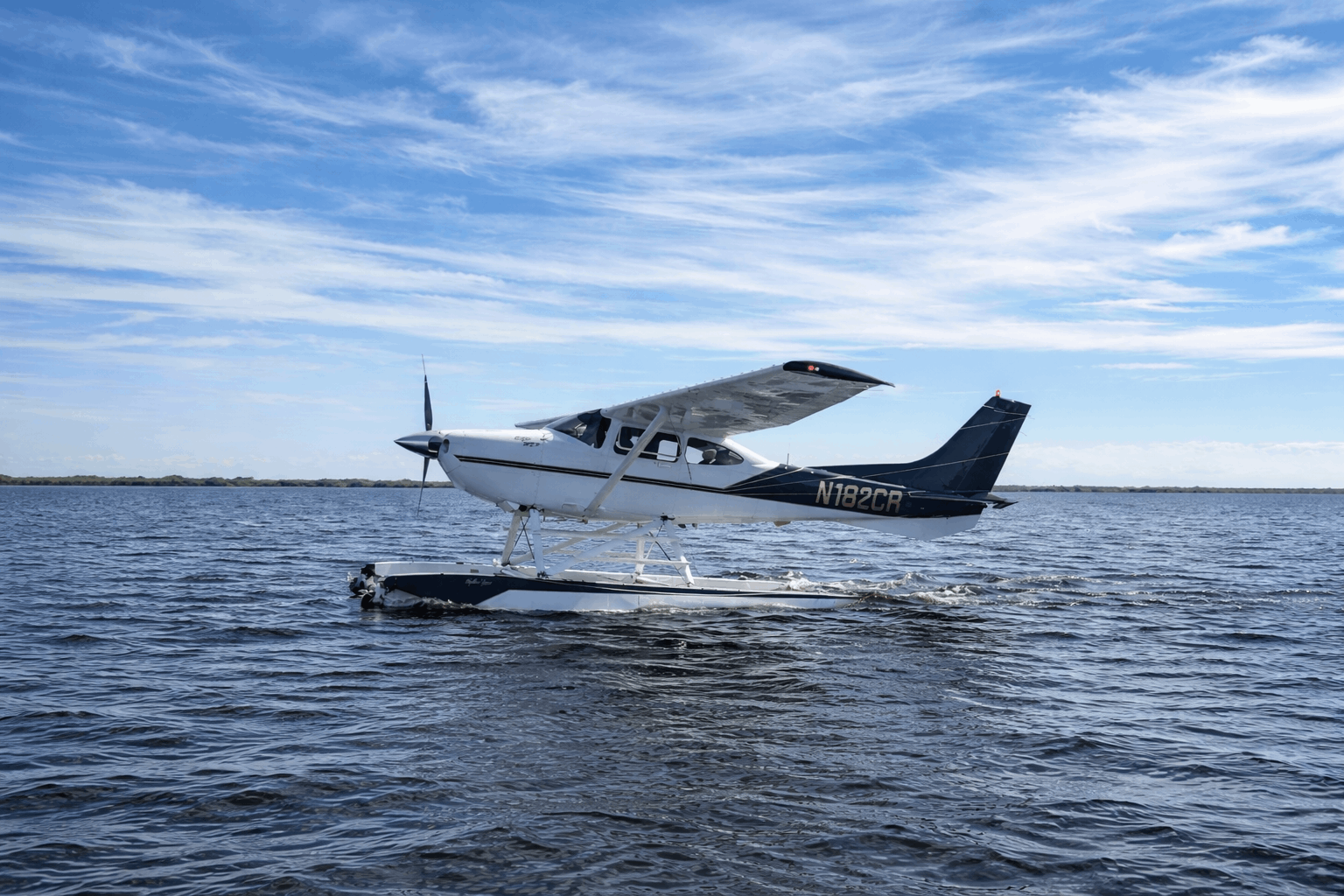
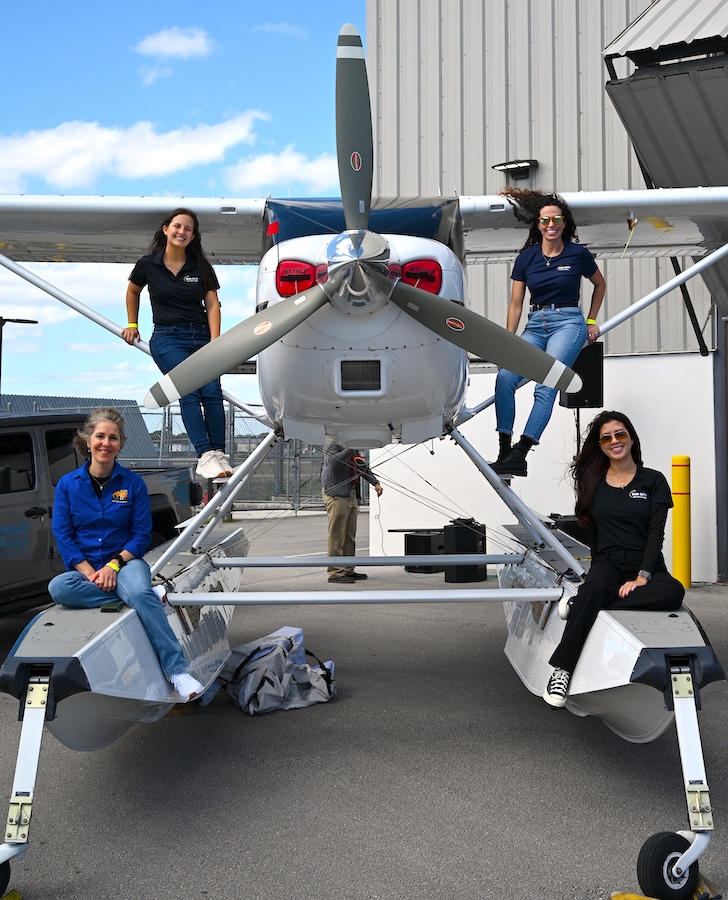
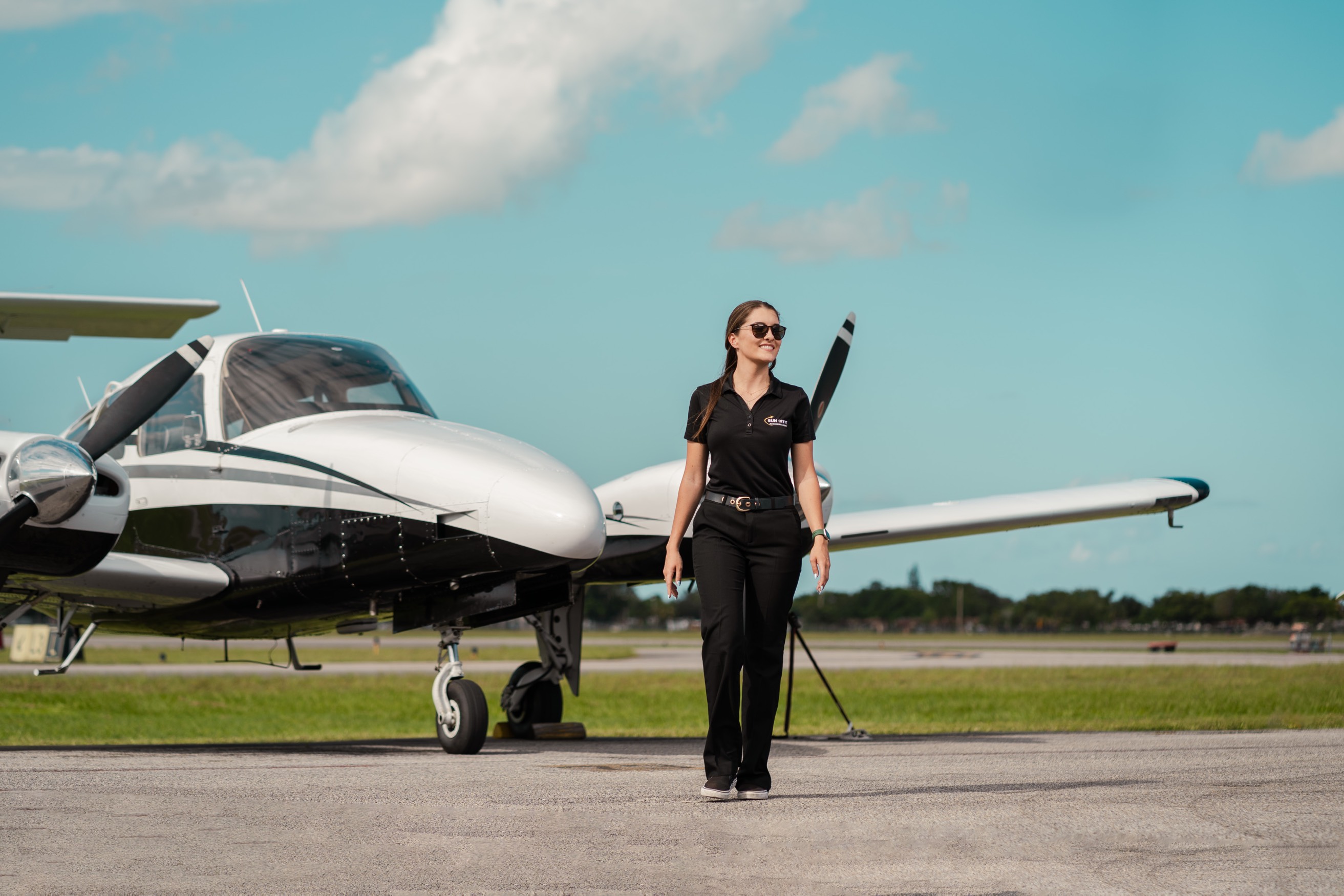
Aircraft and tools matter too. Sun City’s fleet includes the Cessna 172 Skyhawk, Beechcraft Duchess for multi-engine training, and Cessna 182 Skylane Seaplane for amphibious training. The fleet also features modern glass cockpit technology, including Garmin 430 navigation systems, Aspen displays, dual Garmin G5 Electronic Flight Displays, Garmin MFDs, and touchscreen Garmin 750xi systems. If you are looking at a professional pilot course, commercial pilot training, or multi-engine rating, this gives you more than basic pattern work.
Sun City Aviation Academy’s main campus is located at North Perry Airport, 7201 S Airport Rd #504A, Pembroke Pines, FL 33023. The academy also has a Melbourne Seaplane Base at 140 S Apollo Blvd, Suite 1103, Melbourne, FL 32901. That gives the school a South Florida base for busy airspace exposure and a Melbourne facility tied to seaplane training on calm freshwater lakes.
The school positions itself around safety-first training, individualized instruction, and mentorship. It is also the 2025 AOPA Flight Training Experience Award winner for Best Flight School in the Southern Region and was voted Best Flight School in Pembroke Pines for 2024 and 2025.
For students comparing aviation programs in Florida, the fit is clearest if you want South Florida controlled airspace, structured Part 141 options, flexible Part 61 options, and a fleet that supports multiple ratings. Review the fleet and Redbird simulator if training continuity and aircraft environment are part of your decision. Compare the full path, not just the first lesson.
FAQ
-
Is South Florida harder for a new student pilot?
It can feel busier because students at KHWO train near Class B airspace around Miami International and Fort Lauderdale. That added workload can help you build radio confidence, traffic awareness, and planning habits earlier.
-
Is Central Florida better if I want a quieter start?
A quieter inland environment may feel calmer at first. Ask how the school introduces controlled airspace, towered airport work, and cross-country planning so your training does not stay too narrow.
-
Which region is better for career-track pilot training?
If your goal is a career path, compare program depth. Sun City offers FAA-approved Part 141 training, flexible Part 61 training, and programs from Private Pilot through advanced ratings and instructor paths.
-
How does weather affect the pace of training?
South Florida provides over 300 flyable days per year, which can help reduce long weather gaps. Sun City also uses an FAA-approved Redbird Full-Motion Flight Simulator to keep training moving when weather or TFRs interrupt flying.
-
What is the best next step if I am comparing schools?
Write down your goal first: recreational flying, private pilot training, instrument rating, commercial pilot training, or a full professional path. Then compare each school against that goal instead of choosing only by distance from home.
Compare Your Training Path
If South Florida airspace, steady flying weather, and a multi-stage program path fit your goals, review Sun City Aviation Academy’s flight training pilot programs, schedule a discovery flight, or contact the team to choose the certificate or rating that matches your next step.
 More Right Rudder