1-(754)314-5076
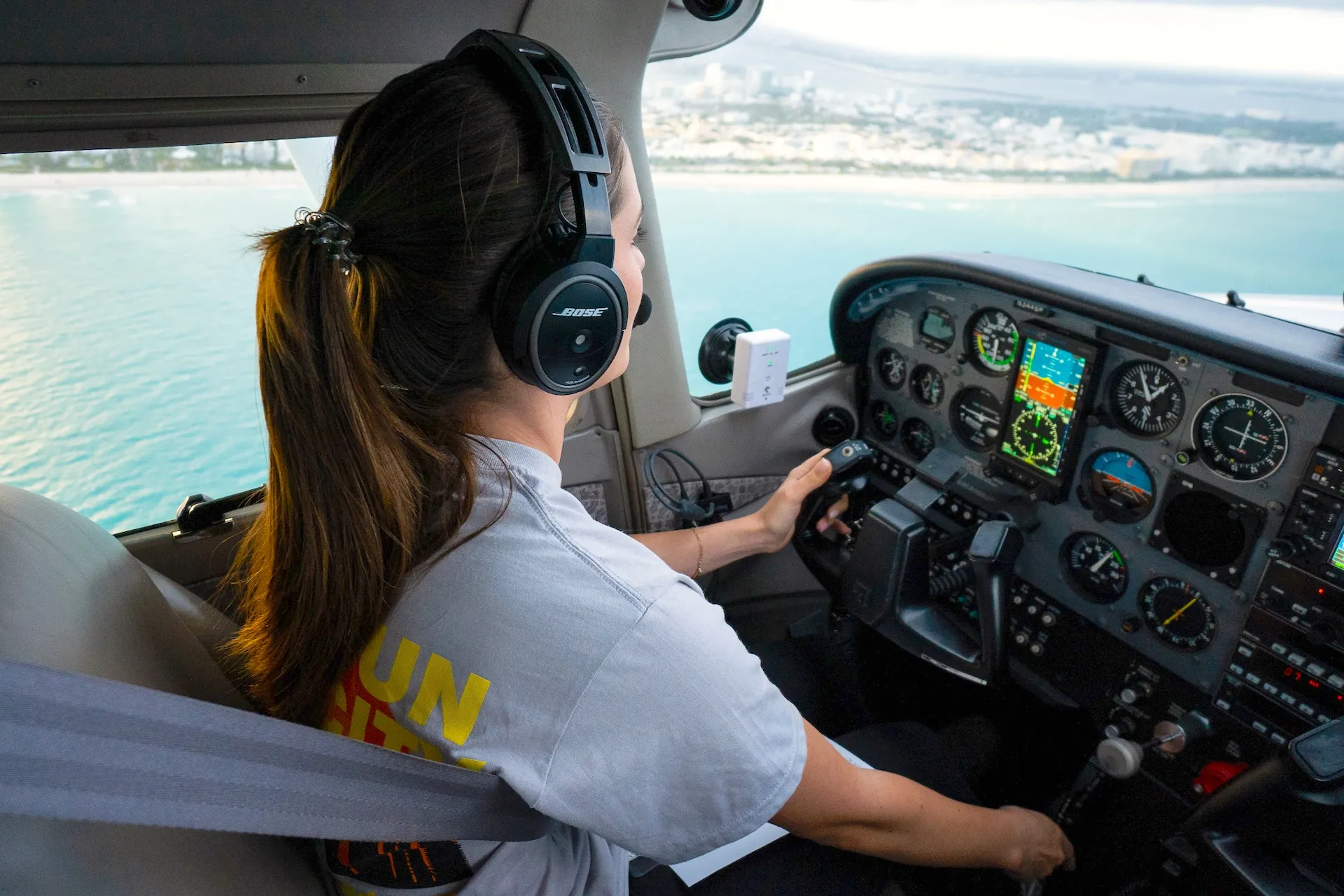
Sun City Aviation Academy instructor and student in flight training

Flight Training
Frequently Asked Questions

Get clear answers before you choose your next step, from local flying lessons to youth aviation programs and airport-specific training paths.

Choose a Topic

Find the answer that matches your goal

Start with the city, program, or training path you are comparing. Each FAQ gives you a plain-English next step without making you sort through every page on the site.

FAQ

Commercial Pilot License Course FAQ

Answers to top questions about earning your Commercial Pilot Certificate: Part 61 vs Part 141 flight hours, commercial privileges, checkride maneuvers, and career pathways in Florida.

Read Answers

FAQ

Fort Lauderdale Flight School FAQ

Answers for Fort Lauderdale students comparing flight schools: the KHWO commute, Part 141 vs Part 61, cost ranges, timelines, training while working full time, and the right first step.

Read Answers

FAQ

Miami Flying Lessons FAQ

Answers for Miami students comparing flying lessons, discovery flights, private pilot training, schedule fit, cost planning, and the best first step at Sun City Aviation Academy.

Read Answers

FAQ

Orlando Flight Training FAQ

Answers for Orlando-area pilots comparing flight training, seaplane training, private pilot options, advanced ratings, cost planning, and the next step with Sun City Aviation Academy.

Read Answers

FAQ

Part 61 Flight School in South Florida FAQ in 2026

Looking for a Part 61 flight school near you in South Florida? Get 2026 answers on Part 61 vs Part 141, hour minimums, schedules, switching, and where Sun City trains at North Perry (KHWO).

Read Answers

FAQ

Pembroke Pines Flight School FAQ

Answers for students comparing a Pembroke Pines flight school, North Perry Airport training, discovery flights, private pilot training, cost planning, and local next steps.

Read Answers

FAQ

Youth Aviation Programs FAQ

Parent-focused answers about AeroCamp, Experience Aviation, youth aviation programs, schedules, age fit, cost planning, and the next step for teens at Sun City Aviation Academy.

Read Answers

Search All FAQs

Quick Answers for Your Flight Training Decision

Search across the most common questions from future students, parents, and pilots comparing Sun City Aviation Academy.
A Commercial Pilot Certificate is an FAA certification that legally authorizes you to act as pilot in command (PIC) of an aircraft for compensation or hire under 14 CFR Part 61 or Part 141. It is the mandatory credential required before flying commercially for charter companies, aerial survey operators, corporate flight departments, or advancing to an airline career. Explore our commercial pilot course for curriculum details.
Under FAA Part 61 regulations (14 CFR 61.129), you must accumulate at least 250 total flight hours, including 100 hours of PIC time and 50 hours of cross-country flight. Under an approved FAA Part 141 structured curriculum, you can graduate and earn your certificate in as few as 190 total flight hours. Read our detailed comparison on the Part 61 vs Part 141 commercial timeline.
Yes, within the boundaries established by 14 CFR 61.133. Commercial pilots can be compensated for direct flying jobs such as banner towing, aerial photography, pipeline patrol, skydiving jump pilot operations, and flight instruction (once certified as a CFI). To fly scheduled passenger airline operations, pilots subsequently build toward the 1,500-hour Airline Transport Pilot (ATP) minimum.
While you can technically hold a commercial certificate without an instrument rating, the FAA places severe operating limitations on non-instrument rated commercial pilots (restricting night commercial flights and limiting passenger carrying for compensation to a 50 nautical mile radius). At Sun City Aviation Academy, we strongly recommend earning your Instrument Rating first so your commercial privileges have zero restrictions.
The commercial checkride tests advanced stick-and-rudder precision defined in the FAA Commercial Pilot ACS. Key flight maneuvers include lazy eights, chandelles, steep spirals, eights-on-pylons, accelerated stalls, steep turns (50-degree bank), and precision power-off 180-degree accuracy landings.
Most career pilots complete their Commercial Single-Engine Initial first in a Cessna 172, then complete an accelerated Multi-Engine Add-On in the Beechcraft Duchess. This sequence significantly lowers training costs while providing full commercial privileges for both categories. Learn more in our breakdown of commercial single vs multi-engine initial training.
Yes. Sun City Aviation Academy partners with Stratus Financial to offer competitive student flight training loans that cover commercial training, multi-engine add-ons, and CFI certification. Review options and apply directly on our flight training financing page.
Full-time students flying 3 to 4 times per week typically complete the dedicated commercial flight training syllabus in 2 to 4 months once minimum hour requirements are reached. Part-time students training on weekends generally finish within 4 to 8 months. South Florida's reliable weather ensures consistent flight progression.
If you already hold your Private Pilot Certificate and are building toward commercial requirements, submit an application through our enrollment page or visit us at North Perry Airport (KHWO) in Pembroke Pines to meet our Chief Flight Instructor.
Fort Lauderdale-Hollywood International (FLL) is a major commercial airport, which makes it a difficult place to learn to fly. Sun City Aviation Academy trains at North Perry Airport (KHWO) in Pembroke Pines, roughly 14 to 15 miles from downtown Fort Lauderdale. Start with the Fort Lauderdale flight school page for the full local overview.
Approximately 14 to 15 miles from downtown Fort Lauderdale, reachable from both I-95 and the Florida Turnpike. Most students report the drive taking under 30 minutes outside peak traffic. We broke down what a training week actually looks like in our guide to flight lessons from Fort Lauderdale.
At a commercial hub, air traffic control has to prioritize airline traffic. A student in a Cessna 172 can wait a long time for a takeoff clearance, and that wait is billed time. North Perry is a towered field built around training, so your lesson starts when the engine does. Our KHWO advantage breakdown covers this in detail.
A private pilot certificate typically runs $12,300 to $15,000 under Part 61, or $10,700 to $12,700 under Part 141. FAA fees vary and additional training may be needed depending on how often you fly. See the 2026 cost and timeline breakdown, or review financing through Stratus Financial.
Both. Part 141 follows an FAA-approved syllabus and can reduce the minimum hours required, which suits students training consistently. Part 61 offers more scheduling flexibility, which suits students fitting training around a full-time job. If you are still weighing the two, read Part 61 vs Part 141 explained.
Book a discovery flight. You take the controls with an instructor beside you and see South Florida from the air. It is the least expensive way to answer the question that matters most before enrolling: do you actually want to do this?
Frequency matters more than the school you choose. Students flying two to three times per week progress substantially faster than students flying every other week, because less time is lost relearning. We will build a realistic timeline with you based on your actual availability, not a best-case brochure number.
Yes, and many of our students do exactly that. Part 61 training exists for this reason. Early morning slots are popular with Fort Lauderdale students because South Florida air is smoothest before the afternoon builds and the drive is faster.
Primary training happens in our Cessna 172s. Multi-engine training uses our Beechcraft Duchess, and our Redbird simulator lets you drill procedures without burning flight time. See the full fleet.
Yes. Instrument rating, commercial, multi-engine, CFI, ATP, seaplane, flight reviews, and instrument proficiency checks are all available. Compare everything on the flight training programs page.
Go to the Fort Lauderdale flight school page for the local overview and cost ranges. Go to Discovery Flight if you would rather see the airport first and decide from there.
Start with the Miami flying lessons page. Sun City Aviation Academy trains at North Perry Airport in the Miami-Fort Lauderdale training corridor, so Miami students can compare a discovery flight, private pilot training, and longer pilot training paths before enrolling.
If you are still deciding, book a discovery flight. It gives you a real look at the aircraft, instructor environment, and airport routine before you choose a full private pilot training plan.
No. Some students train for personal flying, while others want a career path. The best first step is to choose the goal you care about most, then compare private pilot training, instrument training, and the professional pilot course.
Start with your goal and schedule, then talk with the team about the training path that fits. Sun City Aviation Academy also has a Stratus Financial page for students who want to explore financing.
Your first lesson usually focuses on comfort, orientation, and basic understanding. You should expect instructor guidance, time around the aircraft, and a clear conversation about what comes next if you want to continue training.
Yes. Sun City Aviation Academy offers training beyond the first certificate, including instrument rating and commercial pilot training. Your first step should still match your current certificate level and goal.
Bring any details the team asks for when you schedule. Comfortable clothing, closed-toe shoes, and enough time to avoid rushing are practical basics. Use the contact page if you need help before booking.
Use the Miami flying lessons page to choose your path. If you are brand new, the simplest first action is a discovery flight.
Yes. The Orlando flight training page helps Orlando-area students compare Sun City Aviation Academy's training options, including specialized seaplane training and broader pilot training paths.
No. Seaplane training is a strong differentiator, but Orlando-area pilots can also use the page to compare private pilot, advanced rating, and career-path options. The best path depends on your current certificate level and goal.
Specialized training can help you build a broader skill set instead of only collecting standard flight hours. A seaplane rating gives you a different operating environment and a more complete feel for aircraft control.
A discovery flight is the clearest first step if you are new to aviation. If your goal is seaplane-specific, use the contact page so the team can point you to the right starting point.
Start with your goal. New students usually compare private pilot training. Rated pilots may compare seaplane training, instrument training, or commercial training.
Choose the certificate or rating first, then build your cost conversation around that path. Students who want financing information can start with Stratus Financial.
It can be worth it when the training gives you access to an aircraft, environment, or instructor focus that is hard to find closer to home. For Orlando-area pilots, that often starts with the seaplane path.
Visit the Orlando flight training page. If you know your target rating, go directly to that program page. If you are undecided, use the contact page to choose the right first conversation.
Part 61 is the section of the FAA regulations (14 CFR Part 61) that sets the requirements for earning pilot certificates and ratings. In a Part 61 flight school, an authorized instructor trains you outside an FAA-approved school curriculum, and you still meet the same certificate requirements as every other pilot. For you, that usually means more flexibility in scheduling and pacing. Your instructor can adjust the lesson plan to how you learn, which helps if you work full time or have a changing week. We offer Part 61 training at our North Perry Airport campus in Pembroke Pines. For a longer walkthrough, read our guide to the difference between Part 61 and Part 141 flight schools.
A Part 141 school holds an FAA pilot school certificate and runs FAA-approved training courses, with a set syllabus, stage checks, required records, and inspected facilities. Part 61 training can offer more scheduling and pacing flexibility. Part 141 offers more structure. Both paths lead to the same FAA practical test (checkride) and the same Airman Certification Standards, so the certificate you earn is the same either way. The difference is how you get there. We hold FAA Part 141 certification and offer Part 141 courses alongside Part 61 training. Our post on Sun City earning FAA Part 141 certification explains what that means.
For a private pilot certificate in a single-engine airplane, Part 61 sets a minimum of 40 flight hours (14 CFR 61.109), while an approved Part 141 private pilot course includes a minimum of 35 hours of flight training. For a commercial certificate, Part 61 uses 250 total hours for a typical airplane applicant, and our Part 141 commercial course lists 190 total hours. Those numbers are minimums, and most students fly more than the minimum under either path. Actual hours depend on how you progress, so a lower minimum does not automatically mean fewer hours or a faster finish. We will map the minimums for the certificate you want against your own pace. Compare the details on our commercial pilot training page or in our guide to the Part 61 vs Part 141 commercial timeline.
Neither path is the better choice for every student. The better fit depends on your goal, your schedule, your funding, and how you like to learn. If you work full time, fly for personal enjoyment, or need lessons that move around your week, Part 61 often fits. If you are heading toward an airline or professional career and want a fixed syllabus with stage checks, Part 141 may suit you better. At Sun City you do not have to change schools to change your mind. Tell us your goal and we will recommend a path, or start with a discovery flight if you are still deciding.
Yes, many students do. Part 61 training lets you and your instructor set a lesson rhythm that matches your work week, and the lesson plan can slow down or speed up with you. Flying at a steady pace keeps your skills fresh and saves you from paying to relearn what you forgot between long gaps. Weather or maintenance can still move a flight, so build a little room into your plan. Contact us with the days and times you can fly and we will talk through what a realistic schedule looks like for your certificate.
You can take our Private Pilot, Instrument Rating, Commercial Pilot, and Professional Pilot courses under either Part 141 or Part 61. That lets you start with the private certificate and keep building without leaving the school. Our Part 61 training can also follow the structure of our Part 141 syllabi, tailored to you, so a flexible schedule still comes with a plan. Browse every certificate and rating on our flight training programs page, or contact us if you want help choosing where to begin.
Total cost under either path comes down to the same things: how many hours you fly, the aircraft rate, instructor time, fuel, and exam fees. A lower minimum on paper does not guarantee a lower bill, because completion depends on your progress and how steadily you fly. For your plan, compare programs on the same assumptions, such as the same aircraft, certificate, and included items. Ask what each quote covers before you decide. We will walk through a plan for your goal and your pace. Financing options through Stratus Financial may be available to qualified applicants, and our contact page is the place to ask about current rates.
Often you can, and the details depend on your training records. Flight time you log is recorded in your logbook, and whether it satisfies a requirement depends on the certificate you want and, for a Part 141 course, on that approved course's own rules. If you started at another school under Part 61 and want to move to a structured Part 141 course, or the other way around, bring your logbook and training records so we can review them together. Contact us before you pay for repeat training and we will tell you what we can credit and what you would still need.
Our main campus for landplane training is North Perry Airport (KHWO) in Pembroke Pines, close to Miami and Fort Lauderdale airspace. Students come from across South Florida, and you can see how the trip works from Miami, Fort Lauderdale, and Pembroke Pines. Our Melbourne base is seaplane-only, so landplane Part 61 and Part 141 training takes place at North Perry. See all our locations to compare drive time against your schedule.
Start with a conversation about your goal. Contact our team with the certificate you want, your work schedule, and any training you have already logged, and we will recommend Part 61, Part 141, or a mix. If you want to feel the cockpit first, book a discovery flight. When you are ready to commit, you can enroll online. Reach out through our contact page and we will help you take the first step.
Sun City Aviation Academy trains at North Perry Airport in Pembroke Pines. Start with the Pembroke Pines flight school page if you want the local training overview.
If you are new to aviation, start with a discovery flight. If you already know you want a certificate, compare private pilot training and the full training program list.
North Perry Airport gives students a real airport environment from the start. That helps you get used to airport routines, instructor communication, and the practical rhythm of training before you move into more advanced work.
Yes. Students can compare private pilot, instrument, commercial, CFI, multi-engine, ATP, seaplane, IPC, and flight review options through the flight training programs page.
Start with the certificate or rating you want, then talk with the team about the schedule and training plan that fits. Students who want financing information can review Stratus Financial.
Yes. A discovery flight is built for that exact decision. You get a first look at the aircraft, instructor environment, and airport routine before committing to a full program.
Yes. Sun City Aviation Academy has a local Pembroke Pines presence and has shared community recognition through its Best Flight School in Pembroke Pines announcement.
Go to the Pembroke Pines flight school page if you want the local overview. Go to Discovery Flight if you are ready to experience the airport first.
Sun City Aviation Academy offers AeroCamp and Experience Aviation. AeroCamp is a short aviation camp. Experience Aviation is a longer ground-training program for high school students.
Both programs are listed for students ages 14-17. That age range matters because the content should feel serious enough for high school students while still giving parents a structured, supervised first step into aviation.
AeroCamp is usually the simpler first step because it is short, hands-on, and built to help a teen decide whether aviation feels real enough to pursue.
Experience Aviation is the stronger fit for a student who already wants deeper ground knowledge and a longer learning rhythm before stepping into full flight training.
The current program pages list AeroCamp at $800 and Experience Aviation at $1,500 yearly. Use the program pages or contact Sun City Aviation Academy for current availability and payment details before planning around a date.
No. They help students explore aviation and build knowledge before a full certificate path. A student who wants to continue can later compare private pilot training, discovery flights, and the full training roadmap.
Yes. If your teen wants to feel the aircraft and airport environment before choosing a program, a discovery flight can be a practical first step.
Choose AeroCamp for exploration. Choose Experience Aviation for steady preparation. If your student is curious but unsure, start short. If your student already talks about pilot training, choose the program with the deeper learning rhythm.
Sun City Aviation Academy training flight over South Florida

Ready for the Next Step?
Start With a Discovery Flight

A discovery flight gives you a practical first look at the aircraft, airport, instructor environment, and training path before you choose a full program.

© Copyright 2026 • Sun City Aviation Academy • All rights reserved.

Powered by Right Rudder Marketing Logo More Right Rudder