What Is & How Long Does a Seaplane Rating Take in 2026?
Published by:
Sun City Aviation Academy
You have heard the term “seaplane rating” tossed around at the airport. Maybe you saw a floatplane skim across the water and land smooth as glass. Maybe a fellow pilot mentioned adding one to their certificate. Whatever brought you here, you are asking the right question: what exactly is a seaplane rating, and how long does it actually take to earn one in 2026?
This post answers both questions clearly. By the end, you will know what the rating covers, how the training works, what the FAA requires, and why Florida’s freshwater lakes make earning an ASES rating faster and more affordable than almost anywhere else in the country.
What Is a Seaplane Rating, Exactly?
A seaplane rating is an FAA add-on rating that allows a certificated pilot to operate aircraft that take off and land on water. The official category is called Single-Engine Sea (SES), and the full designation is ASES, which stands for Airplane Single-Engine Sea.
Here is the key thing to understand: a seaplane rating is not a brand-new certificate. It is added on top of a pilot certificate you already hold. So if you have your Private Pilot Certificate or higher, you can add the ASES rating to it. Once you earn it, your certificate will read “Airplane Single-Engine Land, Airplane Single-Engine Sea.” That means you are legal to fly both land planes and floatplanes or amphibious aircraft.
The rating covers a distinct set of skills that land pilots simply do not practice. You will learn:
- Water taxiing and how to manage an aircraft on the surface of a lake or river
- Glassy water and rough water takeoffs and landings, each requiring a different technique
- Dock approaches and step turns, which are specific to seaplane operations
- Emergency procedures unique to water operations
- Seamanship basics, including understanding water currents, wakes, and obstacles
These are real, hands-on skills. Flying off water feels completely different from a runway. The training reflects that difference, and that is what makes the ASES rating so rewarding to earn.
ASES vs. SES: Is There a Difference?
You will see both terms used. They refer to the same thing. SES is the shorthand pilots use in everyday conversation. ASES is the official FAA designation. Both mean you are rated to fly single-engine aircraft that operate on water. Throughout this post, the terms are used interchangeably, just as the FAA and the aviation community do.
If you are curious about the FAA’s official definitions and certification standards, the FAA’s Pilot’s Handbook of Aeronautical Knowledge is the authoritative reference.
How Many Hours Does a Seaplane Rating Take?
This is the question most pilots want answered first. The short answer: the FAA does not set a specific minimum hour requirement for an add-on seaplane rating when you already hold a Private Pilot Certificate or higher. That is different from your initial rating, which did have a minimum hour requirement.
In practice, most pilots complete their ASES add-on rating in approximately 5 to 10 flight hours, depending on their experience level and how quickly they adapt to water operations. Some pilots who are already comfortable with short-field and crosswind techniques pick up the seaplane skills faster. Others need a few extra sessions to master glassy water landings, which require a specific visual and physical technique.
The training itself is typically structured as an intensive, focused course, often completed over just a few days. That is intentional. Seaplane training is immersive by nature, and back-to-back flying sessions help you build muscle memory quickly. You are not spreading out lessons over months. You come in, fly hard for a few days, and walk out with a new rating on your certificate.
At Sun City Aviation Academy, the Seaplane Safari course is designed exactly this way. It is a focused, enjoyable experience that takes you from zero seaplane time to FAA-rated in a concentrated block of training.
What Aircraft Will You Train In?
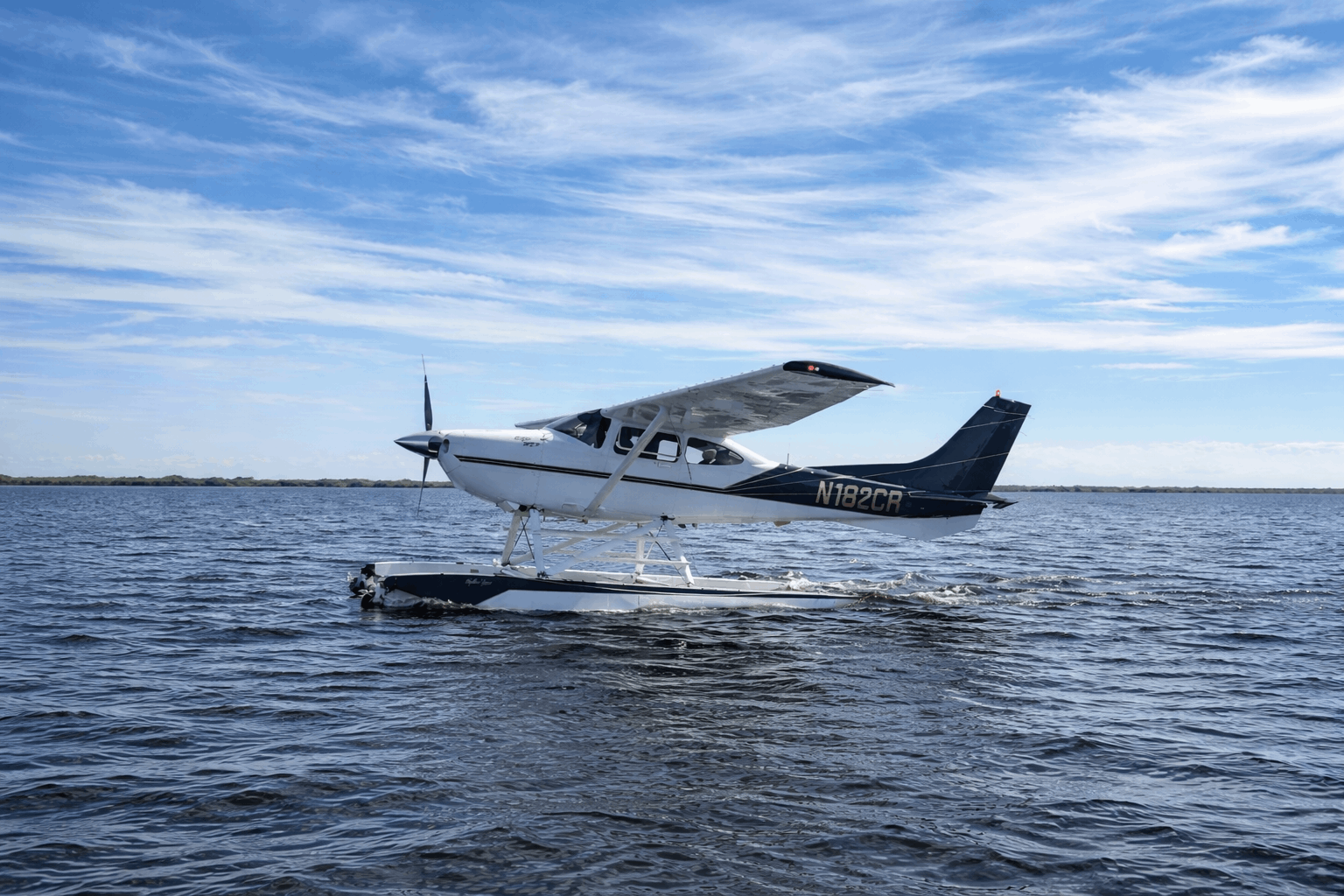
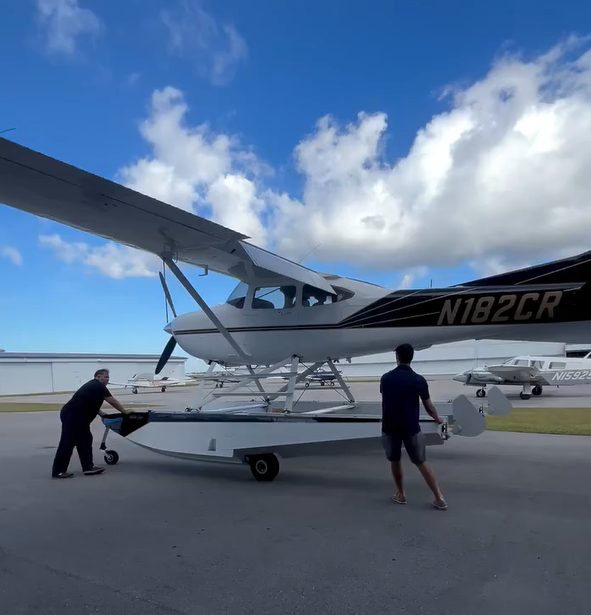
At Sun City Aviation Academy, seaplane training takes place in a Cessna 182 Skylane configured as an amphibious aircraft. This is not a dedicated floatplane that only operates on water. An amphibious aircraft has both floats and retractable landing gear, meaning it can operate on land runways and water surfaces. That versatility makes it one of the most practical platforms for earning your SES rating.
The Cessna 182 is also a well-known, well-understood airframe. If you already trained in a Cessna during your private pilot certificate, you will find the 182’s handling familiar. The seaplane-specific skills you are learning, not an unfamiliar airframe, become the focus of your training from day one.
Why Florida Is the Best Place to Earn Your Seaplane Rating
The state of Florida offers a combination of conditions that simply does not exist everywhere. Here is why it matters for your ASES rating:
Flyable weather year-round. Florida averages over 300 flyable days per year. Seaplane training requires calm, clear conditions, especially for glassy water work. More good weather days mean fewer cancellations and a faster path to completion.
Freshwater training environment. Sun City’s seaplane training is based at the Melbourne Seaplane Base, located near Melbourne, Florida. Training on freshwater lakes rather than saltwater inlets protects the aircraft from corrosion. Saltwater is notoriously hard on floats, hardware, and airframe components. Freshwater training is easier on the aircraft and can mean lower long-term maintenance costs for operators, which helps keep training accessible.
A real towered airport nearby. The Melbourne base operates near KMLB, a Class D towered airport served by commercial airliners. That means your training happens in a real ATC environment. You are not training in isolation on a remote pond. You are operating in the kind of airspace that challenges you to grow as a pilot, not just as a seaplane pilot.
Coastal practice areas with less congestion. The Melbourne area offers immediate access to uncongested coastal practice areas alongside the freshwater lakes used for water operations. Your training is not squeezed into a busy corridor. You have room to practice, maneuver, and build confidence.
All of this means your training moves at the pace you want it to, without unnecessary delays caused by weather, airspace conflicts, or equipment issues.
Who Should Earn a Seaplane Rating?
The ASES rating is a smart move for several types of pilots:
Recreational pilots who want to add adventure and variety to their flying. Landing on a lake is one of the most unique experiences in general aviation.
Career-track pilots who want a well-rounded logbook. Airlines and corporate operators value pilots who demonstrate a broad range of certificate categories and ratings.
Pilots building toward advanced certificates. If you are working toward your Commercial Pilot Certificate or beyond, adding an ASES rating demonstrates initiative and adds category diversity to your qualifications.
Instrument-rated pilots who want a new challenge. The Instrument Rating sharpens precision. The seaplane rating develops adaptability. Together, they make you a more complete aviator.
If you are still working toward your first certificate, the Private Pilot Training program is the place to start. Once you hold your PPL, you are eligible to pursue your seaplane add-on.
How the Checkride Works
Unlike your initial private pilot checkride, there is no separate written knowledge test required for an add-on ASES rating when you already hold a Private Pilot Certificate. The FAA checkride for the seaplane rating is a practical test only, conducted with a Designated Pilot Examiner (DPE).
The examiner will evaluate your ability to perform all the core seaplane maneuvers to the standards in the FAA’s Airman Certification Standards (ACS). That includes your water taxi technique, takeoffs and landings in different water conditions, emergency procedures, and your understanding of seamanship fundamentals.
Your instructor at Sun City Aviation Academy will prepare you thoroughly for each area. The Seaplane Safari course is structured so that by the time you reach your checkride, you have practiced every required task multiple times and are confident in your execution.
What Does the Seaplane Rating Cost?
Training costs vary based on how many hours you need and the aircraft used. The best approach is to contact Sun City Aviation Academy directly to get accurate, up-to-date pricing for the Seaplane Safari course. If the cost of the rating is a concern, the school’s partnership with Stratus Finance offers financing options for flight training. Flexible payment options exist so that a rating like this does not have to wait for the right financial moment.
Frequently Asked Questions About Seaplane Ratings
-
Do I need a specific certificate before earning a seaplane rating?
Yes. You must hold at least a Private Pilot Certificate before adding an ASES (seaplane) rating. The rating is an add-on to an existing certificate, not a standalone license.
-
How many flight hours does a seaplane rating take?
Most pilots complete the add-on ASES rating in approximately 5 to 10 flight hours. There is no FAA-mandated minimum for an add-on when you already hold a Private Pilot Certificate or higher. Your actual hours depend on your current experience level and how quickly you adapt to water operations.
-
Is there a written test for a seaplane rating?
No. When adding an ASES rating to an existing Private Pilot Certificate or higher, there is no separate FAA written knowledge test. Only a practical test (checkride) with an FAA Designated Pilot Examiner is required.
-
What is the difference between an amphibious aircraft and a floatplane?
A floatplane can only operate on water. An amphibious aircraft has both floats and retractable landing gear, allowing it to operate on both water and land runways. Sun City’s seaplane training uses an amphibious Cessna 182 Skylane.
-
Why train on freshwater rather than saltwater?
Saltwater is corrosive to aluminum floats, hardware, and airframe components. Freshwater training reduces wear on the aircraft and is a more controlled learning environment. Sun City’s Melbourne Seaplane Base uses Florida freshwater lakes specifically for this reason.
-
Can I earn a seaplane rating if I am still a student pilot?
No. You must hold at least a Private Pilot Certificate to add the ASES rating. If you are still working toward your PPL, start with Private Pilot Training first.
-
How long does the full Seaplane Safari course take from start to checkride?
The course is designed as an intensive, concentrated block of training. Most students complete the training and checkride within a few days of focused flying. This format helps you build skills quickly and efficiently.
Ready to Land on Water?
The seaplane rating is one of the most memorable certificates you will ever add to your logbook. It is practical, achievable, and completely within reach. Florida’s weather, freshwater lakes, and real-world airspace make it one of the best places in the country to earn it.
Sun City Aviation Academy’s Seaplane Safari course is waiting for you at the Melbourne Seaplane Base. A focused few days of flying on Florida’s freshwater lakes and you walk away with a rating that very few pilots hold.
Enroll now or contact the team to ask about the next available course date. Your first water landing is closer than you think.
 More Right Rudder