Does a Seaplane Rating Count as a Flight Review in 2026?
Published by:
Sun City Aviation Academy
Your biennial flight review is coming up. You know you need it. But instead of spending an afternoon flying standard maneuvers in the same airspace you always fly, what if you could knock out your review requirement while earning a brand-new rating at the same time? That is exactly what an ASES seaplane rating can do for you, and it is one of the most overlooked opportunities in general aviation.
This post explains exactly what the FAA says about seaplane ratings and flight reviews, how the rule works in practice, and why Florida is one of the best places in the country to make this happen. If you are a certificated pilot with a BFR due on the horizon, keep reading. This might solve two problems at once.
What the FAA Actually Says: The Rule Explained Simply
The FAA regulation that governs flight reviews is 14 CFR 61.56. The rule requires every certificated pilot to complete a flight review with an authorized instructor every 24 calendar months in order to act as pilot in command.
Here is the part most pilots do not know: the same regulation includes a specific exception. According to FAA 61.56(d), a pilot who passes a practical test for a certificate or rating satisfies the flight review requirement. That practical test counts as the review, and your 24-month clock resets from the date you passed.
An ASES (Airplane Single-Engine Sea) rating is a practical test. When you complete the training, fly with a Designated Pilot Examiner, and pass your checkride, that event satisfies the biennial flight review requirement under FAA rules. You do not need a separate BFR on top of it.
This is not a loophole. It is written directly into the regulation, and the FAA confirms it in the governing rules at 14 CFR 61.56. If you have questions about how it applies to your specific situation, always confirm with a certified flight instructor or the FAA directly.
Why This Matters More Than You Might Think
Think about what a standard biennial flight review usually looks like. You schedule an hour of ground review and an hour of flight with an instructor. You cover airspace rules, go over some maneuvers, and walk away with a logbook endorsement. It is necessary. It is not exactly thrilling.
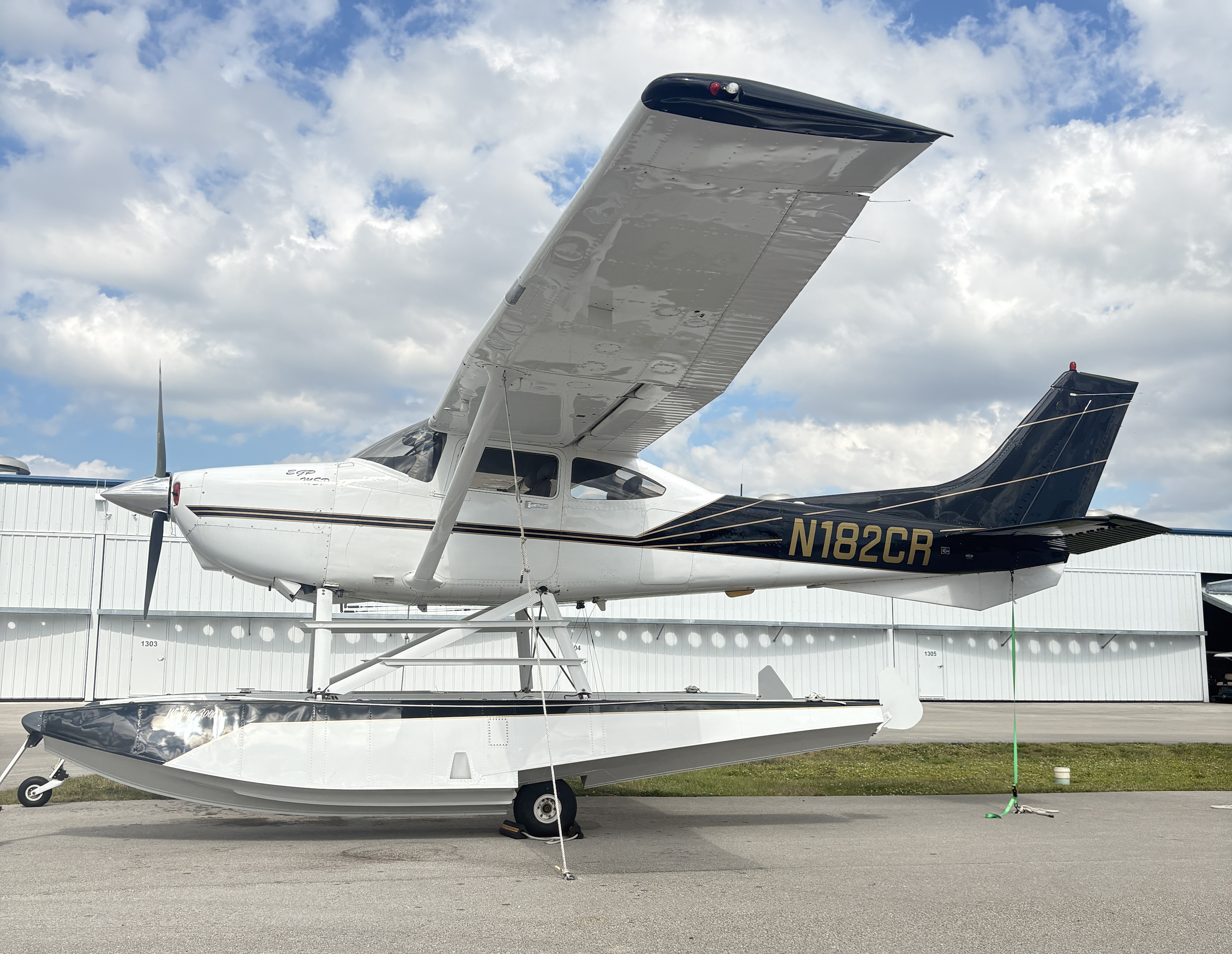
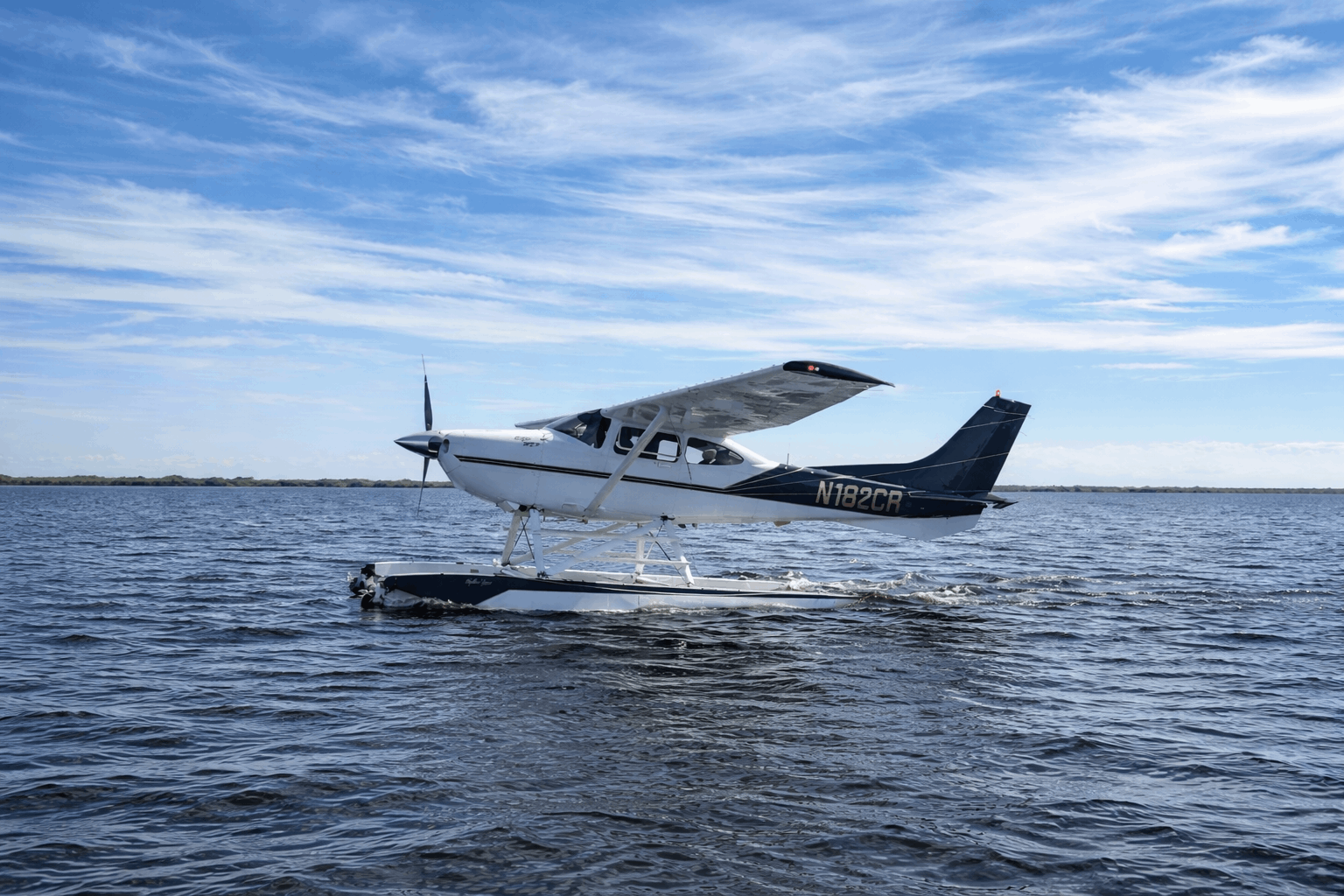
Now consider what an ASES seaplane rating looks like instead. You travel to Melbourne, Florida, operate an amphibious Cessna 182 Skylane on freshwater lakes, learn to take off and land on water, and earn a brand-new category and class rating that very few pilots hold. Your logbook gets updated. Your certificate gets updated. And your flight review clock resets.
The training takes roughly the same number of days as a standard review weekend trip, but you walk away with something fundamentally different: a new skill set, a new rating, and a story worth telling at every hangar fly-in for the rest of your career.
What You Actually Learn During the Seaplane Rating
The ASES add-on rating is not just a formality. It demands real new skills from you. Water operations are categorically different from land flying, and the training reflects that. Here is what the course covers:
Water taxi techniques are the first adjustment. There are no painted centerlines on a lake. You learn to manage wind, current, and wake from other watercraft while maneuvering on the surface.
Glassy water takeoffs and landings require a specific technique that does not exist on a runway. When the water surface is mirror-flat, there are no visual depth cues. You use a precise pitch attitude and rate of descent rather than visual flare judgment. It takes practice to get right, and getting it right is deeply satisfying.
Rough water operations teach you how to read a water surface for chop, swells, and obstacles before committing to a takeoff or landing run.
Step turns and confined area water taxiing round out the surface handling skills. These are tight, deliberate maneuvers that sharpen your overall aircraft control.
Seamanship fundamentals cover rules of the water, right-of-way with boats and other watercraft, and how to handle an aircraft near docks and shorelines.
Each of these skills builds a dimension of aeronautical decision-making that translates back to your land flying. Pilots who train on water often report improved situational awareness and more deliberate control inputs in all their flying.
Who Is the Ideal Candidate for This Approach?
Not every pilot is in the right position for this. Here is a clear picture of who benefits most:
Pilots with a BFR due within the next few months are the obvious fit. If your 24-month clock is ticking, you need a review regardless. Redirecting that requirement into a seaplane rating is a straightforward decision.
Instrument-rated pilots looking for a new challenge after years of focused IFR flying. The Instrument Rating sharpens precision flying to a fine point. The seaplane rating develops adaptability and feel in a completely different environment. Together, they make for a well-rounded aviator.
Commercial pilot candidates who want a more diverse logbook. If you are working toward your Commercial Pilot Certificate, adding an ASES rating demonstrates initiative and adds category diversity that sets your credentials apart.
Recreational pilots who simply want more. Flying is supposed to be fun. Landing on a Florida lake in an amphibious aircraft is genuinely, undeniably fun.
If you are still working toward your first certificate, the Private Pilot Training program is where your journey starts. Once you hold your PPL, you are eligible to add the ASES rating.
Why Florida Makes This Easier Than Almost Anywhere Else
Timing and environment matter when you are trying to knock out a rating efficiently. Florida has both working in your favor.
Over 300 flyable days per year means you are not fighting weather delays. Your training dates are far more likely to go as planned compared to scheduling seaplane training in a region with unpredictable seasonal weather.
Freshwater lake training at the Melbourne Seaplane Base protects the aircraft from the corrosive effects of saltwater. That keeps the equipment in better shape and the training environment more controlled. You are not fighting tides, heavy boat traffic, or salt spray while you are learning a new skill set.
Melbourne’s Class D airspace near KMLB means you are operating near a real towered airport with commercial traffic. You are not training in isolation. You are operating in a genuine aviation environment alongside airliners, learning real radio procedures and real traffic awareness from day one.
And if you are coming in from South Florida, the drive to Melbourne is manageable. The Melbourne Seaplane Base is a dedicated facility built for exactly this kind of training.
How the Logistics Actually Work
Here is what the process looks like in practice. You contact Sun City Aviation Academy, confirm availability at the Melbourne Seaplane Base, and schedule your Seaplane Safari course. The training is designed as a concentrated block, typically completed over a few days of focused flying.
Your instructor will take you through all required maneuvers and prepare you for the practical test. When you are ready, you fly with a Designated Pilot Examiner (DPE). Pass the checkride, and two things happen simultaneously: you earn your ASES add-on rating, and your flight review requirement resets for the next 24 calendar months.
There is no separate BFR paperwork needed. No additional endorsement required. The practical test covers it under 14 CFR 61.56(d).
If the cost of the course is a consideration, Sun City Aviation Academy works with Stratus Finance to offer financing options for flight training. You can explore payment structures that make the rating accessible without waiting for the perfect financial moment.
Frequently Asked Questions
-
Does passing a seaplane rating checkride really satisfy the FAA flight review requirement?
Yes. Under 14 CFR 61.56(d), passing any practical test for a certificate or rating satisfies the flight review requirement. The ASES seaplane rating practical test qualifies. Your 24-month BFR clock resets from the date you pass the checkride.
-
Do I need a written knowledge test for the ASES add-on rating?
No. When adding an ASES rating to an existing Private Pilot Certificate or higher, the FAA does not require a separate written knowledge test. Only the practical test (checkride) is required.
-
What certificate do I need before starting seaplane training?
You must hold at least a Private Pilot Certificate to add the ASES rating. If you are still working toward your first certificate, start with Private Pilot Training first.
-
How many flight hours does the seaplane rating take?
There is no FAA-mandated minimum hour requirement for an add-on ASES rating when you already hold a Private Pilot Certificate or higher. In practice, most pilots complete the training in approximately 5 to 10 flight hours, depending on their experience level and how quickly they adapt to water operations.
-
Can I complete the seaplane rating as a weekend trip from South Florida?
Yes. The Seaplane Safari course at Sun City Aviation Academy is structured as a concentrated block of training, typically completable in a few days. Melbourne is a manageable drive from South Florida, and the Melbourne Seaplane Base is set up specifically for this type of training visit.
-
Is the seaplane rating useful beyond the flight review benefit?
Absolutely. The ASES rating adds a new category and class to your pilot certificate, expands your legal flying privileges, builds skills that improve your overall airmanship, and gives you access to a category of flying that very few pilots experience.
-
Can I finance the seaplane rating course?
Yes. Sun City Aviation Academy partners with Stratus Finance to offer financing options for flight training, including add-on ratings like the ASES seaplane course.
Ready to Make Your Next BFR Worth Remembering?
Your flight review is going to happen one way or another. The only question is whether it is a routine afternoon or the trip that earns a new rating on your certificate.
Sun City Aviation Academy’s Seaplane Safari course at the Melbourne Seaplane Base is ready for you. A few days on Florida’s freshwater lakes, a practical test, and you walk away with both your ASES rating and a reset BFR clock.
Enroll now or contact the team to ask about scheduling your Seaplane Safari course. Do not let your next flight review be forgettable.

 More Right Rudder